Tuesday, March 17, 2026

My Husband Is Wearing Green Today

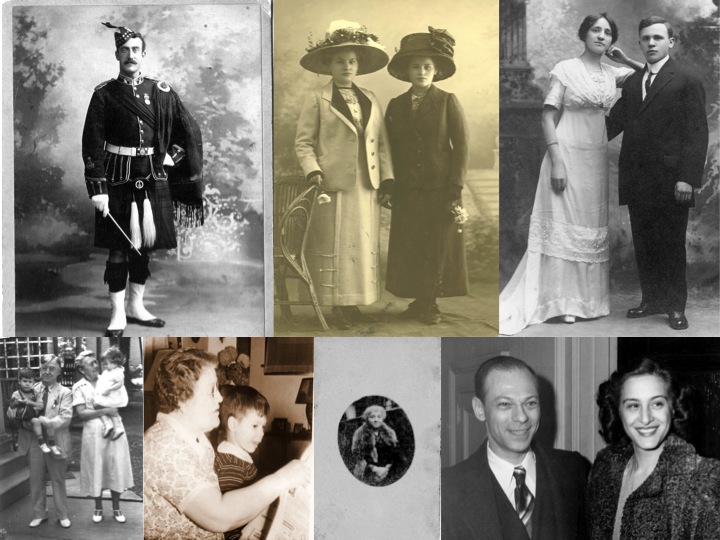
In honor of my hubby's Irish ancestors, on St. Patrick's Day:

Smith

Hubby's 5th great-grandparents, the Smiths, were born in Ireland, according to US Census of their children (question about country of parent's birth). William Smith (1724?-1786) and his wife Jean (1724?-1805) may have been from Limerick, as suggested by probate documents from a family member. 

Their children were born in Cumberland County, Pennsylvania. Son Brice Smith got "Ohio Fever" and moved from Pennsylvania to Fairfield County, Ohio before 1820. The Brice name was passed down in the family tree to Smith's grandson and great-great grandson. 

Larimer and Gallagher

Robert Larimer (1719?-1803) was born in the North of Ireland, according to the genealogy booklet Our Larimer Family. Sailing to North America to seek his fortune, he was shipwrecked and brought to Pennsylvania. He was forced to work for years to repay his rescuer, but eventually left his master.

Robert married Irish-born Mary Gallagher (or O'Gallagher) (1721?-1803) in Pennsylvania. Mary and Robert also got Ohio Fever and brought their family to Fairfield County, Ohio. They were hubby's 5th great-grandparents.

Shehen or Shehan

Hubby's 2d great grandparents were born somewhere in Ireland, according to the 1841 UK Census. John Shehen or Shehan (1801?-1875) and wife Mary (1801?-1874) left Ireland and moved to London by 1834, where the first of their children was born. John was a laborer and Mary was a laundress. Sadly, both seem to have died in a poorhouse. 

McClure

The McClure line really originated in Scotland but relocated to County Donegal at some point before ancestor Halbert McClure's time. Halbert (1684?-1754) married Agnes in County Donegal. Agnes and Halbert were hubby's 5th great-grandparents. 

They sailed to Philadelphia together with other family members sometime in the 1740s. Not as indentured servants, but with money to pay passage and buy land in the colonies. The McClures all walked as a group to Virginia, where they kept buying land as their sons married. Their grandson caught Ohio Fever and his descendants moved further west to Indiana. 

Happy St. Patrick's Day!

Friday, March 13, 2026

Printing the Farkas Family Tree Book

 
Remember that gigantic pdf file I created for my newly-updated Farkas Family Tree book? I wanted to print a master copy for myself and a second copy for my twin sis. 

Unsure of whether the print shop could manipulate a pdf of nearly 700 MB, I included pdfs of Parts 1, 2, and 3 plus the big file when I brought my flash drive to the printer.

They strongly advised against printing one giant book with spiral binding. Instead, they recommended I pick a suitable place to break the book into two parts, and create two separate pdf files. The shop would then create two spiral-bound volumes (Part 1 and Part 2), each with a clear cover and a sturdy backing.

A good place to split the big pdf file, I decided, would be after the end of World War II. Now Part 1 contains minutes and reports from 1933 to 1945, and Part 2 runs from 1946 to 1964. This meant redoing the title page for Part 1 to indicate it was 1 of 2.

Also I created a new title page for Part 2, as shown at top. For an illustration, I chose a photograph of the Ellis Island Memorial Wall inscription for my maternal grandparents. Grandma Hermina was a charter member of the Farkas Family Tree and her husband, Grandpa Theodore, was one of the early officers. This is a way to honor them as big movers and shakers within the family tree association. Grandpa Theodore carefully checked over the finances and insisted on receipts for expenditures!

Note: Only men were allowed to serve as President or Vice-President or Treasurer, while women were allowed to serve only as Secretary. This was codified in the family tree constitution 😆 

The result: two digitally-printed, spiral bound books, Parts 1 and 2, a total of 300 sheets/600 pages, with a clear cover and a heavy back cover. One for me, one for Sis. Easy to browse, very legible pages, and easy to pass down to next generation.

Lessons learned

  • Ask the expert (print shop people).
  • Consider what makes sense for your project (I split the file so Part 2 begins at the start of a new year, after the war was over)
  • Communicate clearly (label part 1 and part 2 clearly)
  • Use every opportunity to add some tidbit if room allows (my photo of the Ellis Island plaque)
  • Consider this a worthwhile investment in perpetuating family history for years to come.

Tuesday, March 10, 2026

Updating and Sharing the Farkas Family Tree Book

For the past few months, I've been reassembling the digital scans of 31 years of meeting minutes from my maternal family's Farkas Family Tree. This family tree association was formed by the children of Moritz Farkas and Lena Kunstler Farkas in 1933, and it met regularly until the end of 1964 (or possibly very early 1965).

Lessons learned at the end...

Updating the original

The original book, shown above in all its 600 page glory, was created from printouts of my scans in 2014. My mother's first cousin Ron kindly lent me bound volumes of the family tree written minutes and historians' reports (really) to scan. I also assembled the family tree song lyrics, the written constitution (really), and other info about the tree. 

Missing from the originals were the minutes from many of the World War II years, but I scanned everything that was available at the time. I spent weeks indexing the name of everyone named in these documents. Then I mocked up a cover with a 1958 family photo and a cousin's handwritten names of each person, and through a local copy shop, printed one for myself.

Quickly I realized it was better to split the volume into two spiral-bound books for ease of browsing. I have the original gigantic volume, which I prefer because I like everything in one place, but everybody else has two volumes.

More recently, the meeting minutes from the war years were found and so I scanned those and distributed them separately, after adding the names to the index.

Reassembling and then splitting the updated file

Now I want to digitally share the fully-assembled book with as many of my second cousins as possible. It took a long time to get every pdf scan into a single document. Then I discovered that this one document, in pdf format, was a hefty 698 MB. 😟 Even when I tried to reduce the size by compacting, it was way, way too large to be emailed.

Way too large to be worked on, in fact. The software app Adobe Acrobat would not allow me to do anything with it, advising that the gigantic file be split into smaller files.

In my next iteration, Part 1 had 219 pages (ending at the end of a month's minutes) and Part 2 had 219 pages (beginning at the start of the next month's minutes). Part 3 had the final 160 or so pages. I compacted each part and the files became a more reasonable size, the largest "only" 150 MB. Still too large for email.

Free digital transfer - LOCKSS

One of my 2d cousins agreed to be my guinea pig for a digital transfer using the free site WeTransfer.com. I signed in, then uploaded Parts 1, 2, and 3 to WeTransfer, added my cousin's email, plus a cover note, and included a reminder that the transfer would expire in 3 days. 

The same day, my cousin accessed and downloaded the digital files. He wrote a quick note to confirm that the parts arrived safely, telling me how many pages in total he had received (so I could compare with what I sent). Hours later, he told me he couldn't stop reading. Now he plans to digitally share the files with his kids. He agrees this is important for LOCKSS - lots of copies keep stuff safe. 

The next day, I emailed several more 2d cousins to ask whether they would like to have the digital files. YES! I've already transferred files to three and will be sending more soon. The more cousins who have the digital files, the longer these family documents will be alive for the future. 

Update: a cousin requested that I share the files via DropBox, which is also free, and I'm happy to say he was able to easily download the three big files from there. 

Next step: reprinting

My next step is to reprint this updated version. More in my next post.

Lessons learned

  • Don't be afraid to update if and when new details and/or documents become available. We want to leave future generations complete and accurate info, if possible.
  • Find out about technical limitations when digitizing. I didn't realize that a pdf could be too big! Luckily, there are always options. In this case, I subscribed to Adobe Acrobat for a month to have the capability to work with pdfs.
  • Make it easy for relatives to receive what you want to share. I wrote emails first and explained (touted) what I wanted to share and why I couldn't just attach the pdf--then said how easy it would be to use WeTransfer. One cousin just said he'd visit me with a USB in hand so I can load it and send it home!

-

Planning a future for your family's past? Please take a look at my book for practical ideas about keeping family history safe for the next generation and beyond.

Saturday, March 7, 2026

Paying Attention to Handwritten Notes in Published Genealogies


When I began my genealogy journey 28 years ago, I was exceedingly fortunate to have a photocopy of The Larimer Family, 1740-1959 by Work and Work. This privately published booklet was the product of decades of research and dedication, including outreach to dozens of living cousins. Later, my husband inherited the original booklet--complete with handwritten changes made by his mother and grandfather.

Today, the Larimer booklet is digitized and available to view or download from FamilySearch.org, donated by someone else in the large family tree. But back in 1958-1959, when my husband's family provided information for the project and received the booklet, the little book and then later photocopies were the only way to access these nuggets of family history. A really great start that allowed me to build out the family tree beyond immediate relatives! But of course not all the info was accurate, let alone complete.

I especially treasure the original my hubby inherited because of the changes made in ink and pencil. At top, one example: the entry for Margaret Jane Larimer who married William Madison McClure. These were hubby's great-grandparents. The death date for Margaret was corrected in blue ink in the booklet handed down in the Wood family. I confirmed the death year, but learned that the birth year was off (actual birth was in 1859). At least the handwritten death year was a better clue than what was printed, 1917.


Similarly, the pencil change shown above was a good clue because I would never have guessed Enoch's middle name was Beery and, more important, there is a pencil notation of the death date and place of this distant cousin. At the time the Larimer booklet was compiled and published, Enoch was still alive. I confirmed both birth and death dates, and other details. This entry is typical and provides lots of clues to follow up.

Best of all, I know who made these changes because I've seen their handwriting on many other documents. One is my late mother-in-law, and one is her father. That adds to the credibility of the Larimer printed genealogy that I will be handing down to my heirs in the future.

The handwritten notations are a great reminder that living relatives provided this info to the people who compiled the family history. From then on, it was up to those who received the printed booklets to mark corrections and updates. Handwritten notes are a heads-up that someone cared enough to make the updates and therefore I should pay particular attention.

"Changed my thinking" is this week's #52Ancestors genealogy prompt from Amy Johnson Crow. 

Thursday, March 5, 2026

Not At RootsTech But Downloading Handouts


I absolutely love meaty presentation handouts. I always check the handout (if available) in advance of a program or webinar. This gives me a good idea of what the speaker will cover, and helps me consider what questions I might have about applying the content to my own genealogy challenges. Then I save the handout in a digital folder, in case I want to refer to it in the future. This happens from time to time, as I realize I need a hint from some program in the past.

This year I will again not be at RootsTech and so I created a playlist of online sessions to watch, sometimes live but usually at my own pace and at my convenience.

However, some interesting presentations are NOT going to be available online, as shown in the excerpt above. 

That's where handouts really come in handy! Even though I can't watch Adina Newman live, I can (and did) download her syllabus. It's ten pages long and chock full of excellent information. 

Adina's handout includes multiple links to search and for background on various US ports of entry, categorized by port. Plus she has links to Canadian border crossings to the US, another way immigrants entered the country. Added to her detailed explanations of how and why to search, make Adina's handout a must-save for me, one of dozens of handouts I'm perusing this week.

If you're #NotAtRootsTech, be sure to check sessions that will not be recorded--and download relevant handouts for future use. 

Tuesday, March 3, 2026

What Will AR-2 Reveal About Eva, Who Married Joseph in 1890?

 
On March 2, 1890, my great-great uncle Joseph Jacobs (1864-1918) married Eva Michalovsky (1869-1941). Both were immigrants, born in "Russia," and both lived on the Lower East Side of Manhattan. Joe was the brother of my great-grandma Tillie. (The certificate calls him Joal but he was Joe or Joseph on other documents.)

It was the first and only marriage for Joe and Eva. One of the witnesses was "M. Mahler," very likely Joe's brother-in-law Meyer Mahler. I downloaded this free full-color marriage cert from New York City Historic Vital Records. Looking at the three Xs and "signatures" of bride, groom, and one witness, I think the signatures were written by the same hand. (Not by the rabbi, whose handwriting is different.) 

Of Eva and Joe's six children, three sadly died very young. Joe was a capmaker for years, until his health declined due to Parkinson's disease. I found him enumerated in a hospital for chronically-ill patients in the 1910 US Census, the hospital where he died in 1918.

Eva was supported by her children after Joe's death, living with son Frank until she died in 1941. Frank had been seriously wounded during his military service in World War I and he later became an advertising executive.

I discovered, thanks to an Ancestry hint, that Eva filled out an Alien Registration form in 1940. She never became a naturalized US citizen. My next step is to request a quote for that AR-2 form, with the hope of learning more about Eva's background. 

UPDATE: AR-2 received just 10 days after I requested the quote and paid. Eva said her maiden name was Michel, birth year was 1871, she had 3 living children in 1940 when she signed the form with X and had it witnessed. 

Sunday, March 1, 2026

Why Edna Wrote Teddy and Minnie, 1943

My aunt Dorothy Schwartz (1919-2001) was in the Women's Army Corps during World War II. She served in the WAC detachment of the US 9th Air Force in England, France, and Belgium from spring, 1943 until summer, 1945. 

It was the first time New York City-born Dorothy had been overseas. The pressure of wartime duties also weighed on her, I know from letters home. But my aunt was dedicated and determined to serve. 

How Dorothy met Edna

In the summer of 1943, walking in the countryside of Shropshire, England with two WAC buddies, Dorothy came upon Mrs. Edna Griffiths walking her dog. Edna, a friendly widow, struck up a conversation. 

She asked Dorothy and her companions to join her and have a drink at Edna's father's home. Later, Edna asked permission to write Dorothy's parents, my grandparents Theodore "Teddy" Schwartz and Hermina "Minnie" Farkas Schwartz. 

Edna's letter to Dorothy's parents

Edna, a kind and thoughtful mother of five, realized how Dorothy's parents must worry about her--and decided to write a note of reassurance. In part, Edna's letter to my grandparents read:

I have had the very great pleasure of meeting your daughter Dorothy and I thought I would like to write and tell you how we enjoyed seeing her. Ours was the first English home she had been to and that makes me very thrilled.

I was taking my little Scottie dog for a walk and met Dorothy and her two friends. I was so anxious to meet them and we finished the evening at my father's home. I really think they enjoyed themselves and they were most interested in all we had to tell them. Since that evening we have met so many of your country women. How we do admire them! We all "fell" for them...

I am sure you all miss Dorothy but she will be happy with the English people, we're to make them feel at home but of course we are not so easy to know, that's what I think. I think we are all beginning to feel the strain of this terrible war... 

 I hope if Dorothy is ever short of a house during her leaves I hope she will come to us. My home is always hers while she is in England. She is really  a beautiful girl and I am sure you are both proud of her.

My best wishes to you both and may we soon see the end of this awful war. Yours very sincerely, Edna S. Griffiths

What happened next

I only have letters from Edna to my family, not letters from my family to Edna. But reading those letters, I can see that the correspondence went on for about two years. 

When Dorothy was moved to France and Belgium, she continued to write Edna and send gifts, such as silk stockings that were just about unavailable in wartime England. 

My grandparents were busy working in the small dairy store they owned in the Bronx, and so my mother Daisy--Dorothy's twin sister--quickly took over the correspondence with Edna. 

Edna's letters reveal thoughts and feelings about where she lived, coping as a widow, pride in her children, and hope as her country joined with the Allies and battled the Axis powers. The letters also show real interest in Dorothy and Daisy and family, and Edna's wish to visit New York City after the war. 

After consulting with a distant cousin of Edna's family, I am offering these handwritten letters to a museum in England. I want to preserve the letters for the sake of future generations and researchers interested in the inner thoughts of those on the British home front during World War II.

Wednesday, February 25, 2026

Try FamilySearch Simple Search in Beta


Thanks to the Simple Search function being tested by FamilySearch.org, I know when and where Frances Walasyk died. I had been looking on the usual genealogy websites but no luck. Until now.

Simple Search is a plain language search tool in beta. No complicated search forms, no special wording or numbers, no range of dates. Really simple. And, after testing a few queries, I discovered it's both simple and effective.

To start, go to the Family Search Labs page and click on the experiment called Try Simple Search. In the search box, you can type your query or even speak it (click on the microphone at bottom right of query box). Then click the search button.

Frances was the mother of my aunt Dorothy's life partner. Frances seemed to disappear from official records after the 1940 US Census and after signing an Alien Registration AR-2 form later in 1940. Could Simple Search find her? 

Surprisingly, my simple query (shown above) returned one result, only one. It was precisely what I needed: a legal document related to Frances's estate. She died on March 5, 1948 and a week later, her daughter Leona (aka Lee Wallace) petitioned the court for power of attorney to settle the estate. A simple question answered in seconds. 

Your actual mileage may vary, and past performance is no guarantee of future performance. My other Simple Search queries for other ancestors returned pages and pages of results, some highly relevant and some less relevant. I'm still experimenting with filtering results by year, place, collection, and so on.

I definitely recommend giving this experiment a test or three!

Sunday, February 22, 2026

Celebrating Our Twin Birthday


Today is the birthday of my twin Sis and myself. We are celebrating together and ready for another trip around the sun!

In this photo, we are tucked into our twin baby carriage and ready for a stroll in the park by our apartment building in the Northeast Bronx. 

No caption, so no idea who's who or exactly when. Still, happy birthday to us!

Friday, February 20, 2026

What I Learned from Nellie Block's AR 2


Earlier this month, I sent for a digital copy of the Alien Registration Form (AR-2) filled out by my paternal great aunt Nellie Block (1876?-1950). Nellie was the oldest sister of my paternal grandfather Isaac Burk. She gave inconsistent answers to each US Census in which she was enumerated and even her death cert raised questions. So I spent $20 to try to learn something new about her. It was worth it.

This is not my first adventure in AR-2 ordering. An earlier order (fee $20) gave me a bit of detail about a different immigrant ancestor. This time I got more for my money.

1) Nellie did not come through Ellis Island

One of the key pieces of new information: Nellie said she immigrated through the Port of Boston in May, 1890. I will now research this port and date to try to find her passenger list. Most of my ancestors came through Ellis Island but not Nellie, apparently!

I have long puzzled over the fact that Nellie was the first among her siblings to leave Lithuania (which was part of the Russian Empire at the time) and come to America. By finding her passenger manifest, I may discover that she did not come directly to America but, like two of her brothers, might have stopped in another country en route. Finding her Boston arrival is now on my genealogy to-do list!

2) Nellie gave a different birth date

She was inconsistent about her age on every document I've seen. For the AR-2 she gave a specific birth date of July 10, 1872. That means she was 78 years old at the time of her death in 1950--not 85 as her gravestone shows. 

Which birth date is real? Even her younger brothers didn't seem to know her actual birth year. I'm just going to have to go with what Nellie swore to in her AR-2 statement.

3) Nellie's activities and occupation

From 1930 on, Nellie was involved with Beth El Hospital, now Brookdale Hospital Center in Brooklyn, New York. Presumably she was a volunteer, but no additional info is on the AR-2 Form. By 1940 Nellie was almost 68 years old and probably she was not employed regularly so she might have had time to be a volunteer.

Her occupation was listed on the AR form as housework and sewing. I wonder whether she sewed for private clients to make extra cash. Earlier in life, for at least 15 years, she was an "operator" on furs and other materials, according to Census answers about occupation.

4) Nellie never applied for citizenship

Of course I looked diligently for any sign of a naturalization document and now I see Nellie told officials she had not applied for first citizenship papers. She would know.

5) Nellie was mostly truthful (I think)

She told the truth about having no living parents, spouse, or children in America. She told the truth about never being in the military. 

However, she definitely didn't tell the truth about her marital status: She was actually widowed, not single, in 1940. Possibly she was not presented with the opportunity to explain how she was widowed not long after her marriage. 

Monday, February 16, 2026

More Penny Postal Greetings from Early Last Century

In the early 1900s, my husband's Wood family mailed each other penny postal greetings for every conceivable holiday.

Here's a colorful postcard sent to Wallis W. Wood in Cleveland, Ohio more than a century ago.

The card was from his aunt Rachel "Nellie" Wood Lewis Kirby in Chicago, staying in touch for Washington's birthday (traditionally February 22nd).

Happy President's Day!

Thursday, February 12, 2026

What the NY Census Suggests About Citizenship


I am so fortunate that so many of my immigrant ancestors settled in New York, because I can use the New York State Census, as well as the US Census, to learn more about their lives. Of course, all the details are only clues until confirmed by additional research.

Above, part of the 1925 New York State Census from the Bronx, showing my maternal great-grandparents, Morris (Moritz) Farkas and his wife Lena, plus 5 of their children: Julius, Peter, Rose, Fred, and Regina. 

What I particularly love about this New York Census is the question about citizenship and where/when naturalized. As marked above, Great-grandpa Morris told the enumerator he was a citizen, naturalized in New York in 1907. Great-grandma Lena Kunstler Farkas said she was a citizen under "husband's papers." Two Hungarian-born children, Julius and Peter, simply were shown as citizens with no further details.

Actually, Morris was naturalized on June 22, 1906 in the Eastern District of New York. According to the concept of derivative citizenship, at that time, the wife and their young children derived their naturalized status from the status of Morris. As a result, this New York Census suggests (but doesn't state) that as youngsters, Julius and Peter were naturalized because their father Morris was naturalized.

Good thing Morris didn't wait to become a citizen because after March 2, 1907, Lena and the minor children would NOT have been able to claim US citizenship by virtue of Morris's naturalization papers. Each would have needed to apply for naturalization individually. More about searching for citizenship documentation online can be found here.

"What the Census Suggests" is this week's genealogy writing prompt from Amy Johnson Crow's #52Ancestors series.

Tuesday, February 10, 2026

My Book Reviews Leading Up to America 250

As the 250th anniversary of US independence approaches, I'm looking back at just a few of my reviews or appreciations of books connected to American history. These books added to my knowledge and understanding of family history context during the past 250 years of American history.

Here are links to my reviews or appreciations of:

  • The Quest for Annie Moore of Ellis Island (I have Ellis Island immigrant ancestors in my family tree)
  • The Road That Made America (hubby's ancestors walked this road from Philly to Virginia)
  • History for Genealogists (helpful for understanding what was possibly influencing the lives of my ancestors, both immigrants and US-born)
  • The Last Ships from Hamburg (some of my ancestors actually sailed to America on these ships)
  • Essential Guide to Researching Your Kentucky Family History (helpful as I was researching a still elusive ancestor in hubby's tree)
  • The Pioneers (helpful for understanding the hype that whipped up Ohio Fever among some of hubby's East Coast ancestors)
Looking forward to reading more books as background for family history in the coming months!

Friday, February 6, 2026

Updating the Family Tree Association Book for My Cousins

 
In 2013, I scanned the meeting minutes from my grandma Minnie's Farkas Family Tree association. The minutes covered tree meetings from 1933 to 1964. This was a six-month project of scanning, sometimes retyping, also annotating, inserting a directory of who's who, adding the tree's official constitution (two versions LOL), a couple of group photos with captions, and more.

Crucially, I painstakingly created a detailed index. Without an index, this is just a doorstop. With an index, it's a super-useful resource for family history that will be passed down because it's easy to locate the mentions of every ancestor named in the book.

At the time, I printed a few spiral-bound copies (1.5 inches thick, as shown above) for cousins who were especially interested. Soon afterward, I scanned the 500 pages in pdf format, then mailed it out on a USB flash drive to each of my second cousins.

Now, 13 years later, one of my second cousins is asking about this volume. And instead of sending out a USB right away, I'm updating the book in two ways.


First, I'm fine-tuning the index to reflect what I've learned since 2014. Above is one of the handwritten notes I made a few years ago when I discovered the exact relationship of Bela Roth. He was actually a brother-in-law of my great-grandma Lena. Changes like this improve accuracy and may even provoke new memories from my cousins who read through.

Second, I'm updating my list of "who's who" showing which ancestors were the founding members, who their spouses were, who their children were, who their children married. Since 2014, a few of these people have passed away and sadly, I needed to insert death dates. 

When finished, this gigantic volume will be ready to again be sent electronically or via mailed USB flash drives to cousins. Also, I will tape a USB to the printed book on my bookshelf, just in case. 

My ancestors had the inspired idea of keeping minutes of every monthly meeting and then having these minutes bound into books to be saved and passed down. The least I can do is to keep alive the memories of these people and the family tree association they created and loved so much by sharing the book with cousins. Again!

Tuesday, February 3, 2026

Mind the Gap: Alex and Blanche Married Far from Family


I've wondered about the marriage of my 1c2r Alexander Roth (1893-1949), related to me via my great-grandmother's Kunstler family. Alex was a son of Sali Kunstler Roth and Bela Bernard Roth, Blanche was a daughter of Frank Schwartz and Freida Klein Schwartz.

Both had immigrated from Hungary with their parents, settling in New York City in the early 1900s. 

Mind the gap

Alex was enumerated as living with his parents on East 19th Street in New York City until the 1920 US Census. Then a gap of 11 years. The next record I found was his name in a Boston city directory from 1931, married to Blanche Schwartz (1892?-1986). 

Blanche was enumerated with her parents in Jewish East Harlem, New York City in the 1915 New York State Census. Then a gap of 16 years. The next record I could find showed her as the wife of Alex in that Boston directory of 1931. 

Marriage in "the gap"

Clearly, Alex and Blanche married during the gap years where I couldn't seem to find any documentation of their whereabouts.

Knowing that different websites use different indexing and search algorithms, I recently redid my research using MyHeritage--and immediately discovered where and when the couple got married during the gap. I followed the link to obtain a scan of the original license/certificate (shown at top), which is housed on FamilySearch but didn't pop up when I searched that site several times. 

Why California?

Why Alex and Blanche married in Los Angeles, 2,800 miles from their parents and siblings, I can't even imagine. The Roth family was heavily into the garment district of New York City, so perhaps Alex was scouting Los Angeles for business opportunities in clothing. That's a guess, only a guess. 

Blanche had experience sewing neckties in the Big Apple. In fact, she may have worked for an uncle who owned a necktie factory in the garment district (my grandma Minnie worked for that same Roth gentleman before she got married). Still, how and why Blanche made the trip to Los Angeles and then married Alex in LA is a total mystery.

I note that Blanche and Alex were married by Rabbi Mayer Winkler, who headed up the Conservative synagogue Congregation Sinai in Los Angeles. Did this factor into their thinking? Nobody knows. I'm just glad I was able to locate their marriage record. 

Thinking of Blanche, who was born on February 3d, and of Alex, her husband for 26 years until his death in 1949.

Sunday, February 1, 2026

Ancestry "AI Stories" in Beta


Another new feature just showed up in an email sent to me by Ancestry: AI Stories, in which added info is provided to help us understand the background of a particular document. 

UPDATE: There is another way to see AI Stories, see bottom of this post. Easiest way to access AI Stories is through an email announcing the availability of such hints. So be sure to watch your email for any Ancestry hint messages. When I clicked through, the hint itself appears on the right of the screen, with the document on the left. 


In my case, the document being described in an audio narrative is about my paternal grandma Henrietta Mahler Burk crossing the border from Canada to the United States, enroute from Montreal south to New York City. 

The written description and audio incorrectly state that Henrietta and her children are going to Montreal, when in fact this is a US immigration document about going from Montreal through Vermont to travel to her mother in New York City. Below is the actual source citation, clearly described as "From Canada to US"


The audio correctly identifies Henrietta as she is shown on the manifest, and links her to her mother, the relative she will be joining in New York City, as well as to her husband, Isaac Burk, who she left in Montreal. 

Below this initial audio and written narrative are other written AI Stories designed to help me "explore what shaped their life." Here's one:

The explanatory details about cross-border movement and documentation were interesting and I found this background helpful as a refresher. I see that the footnote only refers to the particular document, not the source of this historical background.

I will continue to look at AI Stories but not listen as I think I can glean the key details about a document more quickly by reading than by listening.

With luck, the "Ideas" beta will spread more widely and so will "AI Stories" in beta, so readers can share their experiences!

UPDATE: AI Stories can be accessed from the record page of a document in your hints or attached to an ancestor. They are not yet available for every record. Below, an image of a document record page that has the notation Listen and Explore. That leads to the AI Stories page for this particular record. I like the background for these records more than listening to a "story" about the ancestor in the record. See what you think!


MORE about AI Stories can be read in the Ancestry announcement here.

Randy Seaver wrote about this feature in beta here.

Living Heirlooms

One of my vivid memories of my grandparents' apartment (just off Tremont Ave. in the Bronx) is seeing a snake plant on the window sill. That tall snake plant was in Grandma and Grandpa's back bedroom as long as I can remember.

What happened to the plant? Since Grandma passed away 60+ years ago, I simply don't know. Many keepsakes were taken by neighbors, and this may have been one of them. But I'll never forget that snake plant. 

Today, my sister and I have house plants with back stories that are meaningful to us.

We each have a pot of oxalis given to us by a long-time friend who has since passed away. No wonder we take good care of these two potted plants, a link to our late friend.

At top, a different kind of plant legacy: A cutting from a plant that a younger relative has nurtured for at least 30 years. I was honored to receive this cutting last year and am keeping it going, hoping that maybe another generation will enjoy it (along with the back story).

Plants are not like the wonderful old photos we inherit or the insightful diaries or colorful maps or other heirlooms we treasure from earlier generations. But they can live on in a different way. If your plants have a family history link, please remember to tell the stories every so often, to let other relatives know the significance of these living heirlooms.

Saturday, January 31, 2026

Happy Birthday to the 19th Century McClure Twins

 
On this day in 1875, fraternal twins Jesse and Bessie McClure were born. They were the youngest children of Train Caldwell McClure and Gulia Swain McClure. Jesse and Bessie were my husband's first cousins, twice removed.

The McClure line has few multiple births, so Jesse and Bessie stand out. Unfortunately, no birth records exist to indicate which twin was born first. 

Jesse McClure worked in the paper and printing industry all his life. At the age of 25, he married dressmaker Elnora "Eleanor" Ross, in 1900. Ten years later, they moved to Everett, Washington for his work. Elnora died of a stroke in 1944; Jesse died in 1952. 

Bessie McClure married Judson Deveny, a tailor, in 1897. They had a daughter, Ruth, before divorcing. Bessie married real estate agent Guy Cockley in 1903, and he helped raise Ruth. Guy died of heart disease in 1934; Bessie died from pneumonia 25 years later, in 1959. Both Bessie and Guy are buried in Falls Cemetery, Wabash, Indiana, where her headstone reads "Mother" and his reads "Dad."

Thinking of the McClure twins on the 151st anniversary of their birth.

Friday, January 30, 2026

Ancestry "Ideas" in Beta


Ancestry is trying something new, offering AI-generated "ideas" for researching an ancestor on your family tree. If you have this feature, now in beta, it will be on the top menu. Look to the right of the ancestor's name,  next to the search button on that profile. I first noticed it on Wed, Jan 28 (it had disappeared by Sat, Jan 31 but then reappeared on Feb 1).

I tried "Ideas" for several ancestors that I've researched extensively.

As shown above, the "ideas" for my husband's great aunt consisted of (1) search for the marriage record, (2) trace the ancestor's residences, and (3) locate her death cert. 

Since the marriage cert is attached as a source and in the gallery, nothing new there. Since every US Census available for this ancestor is reflected in her profile, nothing new there. Not shown in the image above but on my tree is this ancestor's death cert as a source. Nothing new there.

Interestingly, "ideas" come with the offer of a detailed action plan. At left, an explanation of why a marriage record is important (this example is from a different ancestor) and suggestions for searching for missing marriage records. (This ancestor's marriage record is listed as a source on the profile and the scan of the cert is in the gallery, by the way.)

Ancestry knows the idea to search online for a marriage index is "beginner-friendly" which I suspect is meant to encourage beginners to go ahead and search.

The next two suggestions (look for a county marriage registration and look for local newspaper marriage announcements) are a bit more advanced and clearly good recommendations.

I note that this AI action plan includes the idea to search in FamilySearch, Ancestry, and MyHeritage! Good suggestion.

My initial reaction is that the AI suggestions don't reflect what is attached to a tree and what is missing. Also these ideas are rather basic for someone with a bit of experience. Maybe this feature will be improved as the beta testing continues?

My next step is to test the AI "ideas" feature with ancestors who are not as well documented. Stay tuned!

Do you have Ancestry "ideas" and if so, what do you think?

UPDATE Jan 31: This beta feature was only on one of my three main Ancestry trees. When I turned on my computer today, it had disappeared from that tree and is not yet available on any other tree. 

UPDATE Feb 1: Beta feature "Ideas" reappeared but on a different tree.

Tuesday, January 27, 2026

International Holocaust Remembrance Day


On this day in 1945, Auschwitz was finally liberated. 

On this day in 2026, I want to honor the memory of relatives of my maternal grandfather, Theodore Schwartz (1887-1965) who were, very sadly, killed during the Holocaust. 

Their surnames were Schwartz, Simonowitz, Winkler, Stark, Zeller, Bimbi, Rezenbach, Feldman

International Holocaust Remembrance Day is today. Never forget, never forgotten.

A new, free collection of Holocaust records, from the Arolsen Archives, was just added to Ancestry, along with US Holocaust Museum records and USC Shoah Foundation recordes. Search for free here.

Wednesday, January 21, 2026

Less Paper But Not Paperless Family History

I'm nearly done shredding the unneeded printouts in my genealogy files. You know, from the days when we cranked microfilm by hand and then printed or photographed something useful for family history? Or made notes while researching at a library? Or filed copies for some unknown reason?

Today just about everything is attached to my online family trees (Census records, birth/marriage/death certificates, links to burial places, other sources, and so on). I have family trees posted on multiple genealogy websites, because LOCKSS (lots of copies keep stuff safe).

Not paperless but less paper

My physical files are much skinnier but I am not going paperless. Here's a quick and incomplete list of what I'm saving, filed by surname or intermarried family groups:

  • Original vital records (certificates have been scanned and uploaded to family trees but originals were paid for and I'm leaving them in my files)
  • Letters and notes from relatives about family history (sadly I didn't date all, but these have good first-hand memories of ancestors and guesstimates of dates/places, including some hand-drawn family trees)
  • Printouts or originals of hard-to-obtain documents (non-US documents for instance)
  • Printouts of family trees and genealogies from relatives who have documented other parts of my ancestral background (not good enough to scan maybe, but good enough to consult now and then)
  • Pending (I'm waiting waiting waiting for answers to my appeals of FOIA info from the US Veterans Administration, for example)
  • Deeds of gift (for items donated to repositories, as when my Sis and I donated our aunt Dorothy's WAC memorabilia)
  • PHOTOS (originals and, yes, copies, if any have notes or are marked up in some way)
Why retain paper? 

When I began my genealogy journey in 1998, the main resources were documents and photos passed down to me. They survived decades in print and with care (archival boxes, for instance) they will survive to be passed down for decades in the future. 

I do not want to entrust my entire family history to a paperless existence. I've created printed booklets, professional photo books, and other types of projects to supplement all my online genealogy info. My designated heirs will get files and boxes, stripped down to the essentials so they can keep these artifacts from our family's history alive for the sake of descendants in the future. 

My heirs will also get my passwords to access my genealogy sites, plus a bit of money to continue subscriptions for a year or two in case they want to look at or add to the trees or noodle around on these sites without having to worry about the cost. Thank you to those in the future who will carry on where I leave off!

Sunday, January 18, 2026

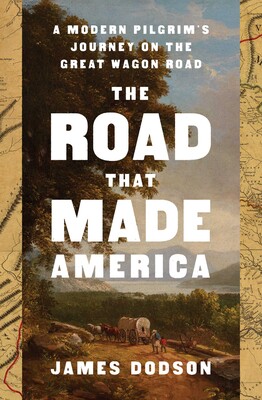
Book Review: "The Road That Made America" by James Dodson


In the mid-1730s, my husband's McClure family (so-called Scots-Irish) sailed across the Atlantic and landed in Philadelphia. They then made their way south to Virginia to settle down and farm. They were among the many immigrants who, over time, walked the Great Wagon Road

No wonder I was drawn to the recent nonfiction book by James Dodson, The Road That Made America.

Subtitled "A modern pilgrim's journey on the Great Wagon Road," this well-written book is both popular history and memoir--an informative and irresistible combination.

A professional writer with deep ancestral roots along the GWR, Dodson often heard his father and other relatives tell stories about earlier generations who walked this road and settled nearby. Eventually, he decides to explore the areas suspected to be part of the road, driving his vintage station wagon through six states over the course of several years.

Dodson visits historians, reenactors, scholars, and locals who speak of family history, local heroes, colorful characters, and important places entwined with events that shaped America, such as the battle of Paoli

Dodson also discusses his family's history, including the unproven but persistent legend that his great-grandmother was Native American and adopted into the family. The author never mentions any DNA testing, but I do hope he tests so he can figure out whether there is any basis for this family lore.

I thoroughly enjoyed my time with Dodson and was pleased to see that he came away with new insights that enriched his life. No index, unfortunately, but an extensive bibliography for readers like me who want to learn more about the Great Wagon Road and its impact on the peoples of America, then and now.

Recommended reading, especially in this year of America 250 celebrations.

Thursday, January 15, 2026

Reading the Signature to Confirm a Name


When my husband's 2d cousin Alice E. Wood (1918-1990) married William Smyth (1914-1994) in 1936, the marriage license showed her name as Alice Eleanor Wood. See it circled in red at top of this image? 

Circled in red at bottom of that image, her name was again shown as Alice Eleanor Wood. This was written by Toledo, Lucas county, Ohio officials after the wedding had taken place on September 1, 1936. 

BUT that's not how Alice herself spelled her name. Her signature read: Alice Elinor Wood. I circled Elinor in blue on the image above. 

Her name appears as Alice Elinor on other official documents, including her Social Security application. And her headstone shows her name as Elinor A. 

One Census document shows "Elinore" and one shows "Alice E" but two others show "Eleanor." Since Census enumerators rarely asked how to spell a name when listing someone on the population schedule, I don't put much weight on any which way they spell anything 😛

Unfortunately, "Eleanor" was officially on this marriage license so that's the way the name is officially indexed. But my tree (and some others) show her as "Elinor." 

Monday, January 12, 2026

How Did Sam Schwartz Meet His Second Wife?

 
On January 12, 1945, my great uncle Samuel Schwartz (1883-1954) married his second wife, Margaret Lazar Simon (1894-1976). Both had been born in Hungary, and both were widowed in 1940, just weeks apart. Sam was the older brother of my maternal grandpa, Theodore Schwartz.

I wondered how Sam and Margaret met each other. My Schwartz family didn't know much about her except they told me when Sam died suddenly, Margaret didn't hand any Schwartz heirlooms or photos over to his family. Nothing at all, according to Sam's two grandchildren, who were very disappointed.

By looking at the address where each was enumerated in the 1940 US Census, I can clearly see that Margaret and Sam were neighbors in Queens, New York. They lived in apartment buildings literally right around the corner from each other. Map above shows a two minute walk from one building to the other.

Margaret's apartment building was a six-story brick structure seen in the New York City tax photos here. Sam's apartment building can be seen in same database here.

So I imagine that Sam met Margaret in the neighborhood, or perhaps in a local store, etc. Later they moved to what was called a "private house" in New York-ese: not an apartment but a one- or two-family home. 

Thinking of Sam and Margaret on this anniversary of their marriage in 1945. 

Thursday, January 8, 2026

Background on The Bronx, Where My Grandparents Settled

Even though I was born in the Bronx and own several books about the history of the Bronx, I'm always interested in more background about this part of New York City. 

This week, I took a look at Gotham: A History of New York City from 1898-1918, by Mike Wallace. The New York Times reviewed the book here. It is a massive tome, nearly 1,200 pages long, and filled with great context about the fast-moving expansion and profound changes in the Big Apple during an important period of development. After reading a chapter or two, I realized I would get more out of checking the index for my specific area of interest: The Bronx.

Not too much of Bronx history actually turns up in Wallace's book, but the bit of material I did find was enough to flesh out more family history context. 

Twenty years of head-spinning change

On the very first day of 1898, Manhattan and Brooklyn (already the country's first and fourth-largest cities) were legally consolidated with Queens, Staten Island, and the Bronx to form the modern New York City we know today. 

Soon the construction of multiple elevated and underground subway systems would put the heart of the city within affordable and convenient reach of the "outer boroughs" (meaning everything other than Manhattan). Combined with technological and electoral changes, not to mention societal changes and historic events both local and global, the period of 1898-1918 made New York City into a formidable business, employment, housing, and political power. 

Immigrants move out of the Lower East Side

This was the booming metropolis where Ellis Island immigrants entered the United States. And these were the years when my immigrant maternal grandparents (Hermina Farkas and Theodore Schwartz) met, married, began a family, and moved out of lower Manhattan to settle in the Bronx, less than an hour's ride by subway from the business districts in midtown and downtown Manhattan. 

No car was needed in those days of cheap mass transit (my Schwartz grandparents never had one, nor did my parents). But if residents had a car, they could enjoy the view on rolling, beautiful parkways as well as driving down the elegant Grand Concourse.

As the book points out, a tremendous housing boom (of affordable apartment buildings in particular) helped attract tens of thousands of residents to the Bronx. My Schwartz grandparents first rented an apartment in a big building on Brown Place, then moved to an apartment on Fox Street, all at the Southern end of the Bronx. 

The extremely rapid growth required more infrastructure, year after year. Bronx groups lobbied for--and ultimately achieved--county status, which came with additional resources. In addition to continued residential and business development, the Bronx as a county enjoyed "home rule" of a sort.

From bucolic to built up

My Dad (Harold Burk, 1909-1978) used to tell stories of his family planning a daylong picnic outing from Manhattan to the Bronx, up to World War I at least. Dad and his immigrant parents, two sisters, and younger brother would escape the summer heat and crowds by boarding a bus or subway to ride to the upper tip of Manhattan, then getting on a horse-drawn wagon to spend a few hours in a green field somewhere in the bucolic Bronx. 

But after World War I, I suspect the Burk family cooled off in one of the big planned Bronx parks, quiet oases of grass and trees. In fact, my paternal grandparents (Isaac Burk and Henrietta Mahler Burk) moved to the Bronx by 1930, settling in an apartment building close to a big park. When grown, three of their four children lived in Bronx apartments (one defected to an apartment in Queens).

Thus, my Schwartz and Burk ancestors were part of the major population shift that quickly pushed the Bronx over one million residents and made it into an "instant city," to borrow a phrase from author Mike Wallace.

Greater Gotham added a smidge of color and context to my knowledge of my ancestors. This is my post for Amy Johnson Crow's week 2 prompt, "A Record That Adds Color," from her 2026 edition of 52 Ancestors in 52 Weeks.

Monday, January 5, 2026

My Top 5 Blog Posts of 2025


Looking back on the year just ended, here are the five most popular blog posts I wrote in 2025. 

  1. Genealogy bloggers on BlueSky. So many genealogy folks have begun posting on the BlueSkyplatform that I wanted to gather, in one place, their blog links. The list contains links to 115 genealogy-related blogs!
  2. Augusta Sarah Markell's short life. This post was popular, I think, because a newly-created Find a Grave memorial gave me the critical clue I needed to learn about a little girl who didn't appear in Census records. A reminder to revisit research and redo searches because new stuff appears all the time.
  3. Change, monitor, hands off? Many people rely on and contribute to the collaborative FamilySearch family tree. However, knowing that anyone can change any ancestor, I wrote about my decisions to change or monitor or just leave it alone, inspired by a blog post from James Tanner.
  4. Full-text surprise: Divorce papers! I was noodling around in FamilySearch's full-text search function, plugging in names of various ancestors, when up popped a link to unindexed but discoverable legal documents, including the contentious divorce initiated by hubby's brave grandma in 1901. Wow.
  5. Back up your family history! This post showed, step by step, how to download a gedcom copy of a family tree from Ancestry, MyHeritage, and WikiTree. It seems a lot of people wanted to try out these download procedures. Or maybe it was the exclamation point that drew attention?!!

Thank you to my wonderful readers for stopping by and sometimes leaving comments. I really appreciate you!

Friday, January 2, 2026

Entering My 28th Year of Genealogy

In 2026, I'm entering my 28th year as family historian and genealogy enthusiast. 

The genealogy bug first bit me in 1998, when the family historian of my mother's generation asked me a simple question about my father's father. Um, I barely knew Grandpa Isaac Burk's name, certainly not when and where he was born or died. But I became determined to find out and what an adventure that was.

Since then, I've had a wonderful time teaming up with my cousins around the world to learn more about my mother's side of the tree (Farkas, Kunstler, and Schwartz families), as well as my father's side of the tree (Burk, Jacobs, and Mahler families).

It's not a secret that I truly 💘 in-laws. This year I created a colorful booklet about the Pietroniro family, in-laws on my hubby's side of the tree. Then younger relatives chimed in with their fond memories and I reprinted the booklet to include what they had to say, in detail.

I continue to improve and/or create memorials on FindaGrave, WikiTree, Fold3, and the usual big genealogy sites. This is cousin bait and a good way to share what I know with relatives and other researchers. I also enjoy participating in some of Amy Johnson Crow's #52Ancestors challenges, as well as WikiTree Connect-a-Thons and genealogy chats on Bluesky. 

During 2025, I made three in-person genealogy presentations and many more virtual presentations, including a free Virtual Genealogy Association talk about cousin bait. Plus, my sis and I presented two programs about identical and fraternal twins (something we know a lot about, being the twin daughters of a twin).

In addition, this year I had professional shadowboxes made for Dad's World War II memorabilia and Mom's childhood jewelry (with her twin sister's as well). These archival-quality frames will keep the artifacts and the stories safe for the future.

Looking ahead, I plan to move old original photos from archival boxes to archival albums. Just about everything has been digitized but now I want to better organize the loose photos for the sake of future generations. I stalled out on this project a couple of years ago, so 2026 will be my year of archival albums. 

Now I have another bite-sized family history photo book in mind for 2026, about my parents and my siblings. This will be a great opportunity to tell my own story in context! 😊

Finally, I want to do something with the letters written from folks in England who met my aunt Dorothy, the WAC, when she was posted there during World War II. These kind people took the time to write Dorothy's parents. I've been in touch with a gentleman who is distantly related to the letter-writers, and he is tracing a direct descendant. If that doesn't work out, I will donate the letters to a museum or historical society in 2026.

Wishing you all the best in this new year.