Showing posts with label paper research. Show all posts

Wednesday, January 21, 2026

Less Paper But Not Paperless Family History

I'm nearly done shredding the unneeded printouts in my genealogy files. You know, from the days when we cranked microfilm by hand and then printed or photographed something useful for family history? Or made notes while researching at a library? Or filed copies for some unknown reason?

Today just about everything is attached to my online family trees (Census records, birth/marriage/death certificates, links to burial places, other sources, and so on). I have family trees posted on multiple genealogy websites, because LOCKSS (lots of copies keep stuff safe).

Not paperless but less paper

My physical files are much skinnier but I am not going paperless. Here's a quick and incomplete list of what I'm saving, filed by surname or intermarried family groups:

  • Original vital records (certificates have been scanned and uploaded to family trees but originals were paid for and I'm leaving them in my files)
  • Letters and notes from relatives about family history (sadly I didn't date all, but these have good first-hand memories of ancestors and guesstimates of dates/places, including some hand-drawn family trees)
  • Printouts or originals of hard-to-obtain documents (non-US documents for instance)
  • Printouts of family trees and genealogies from relatives who have documented other parts of my ancestral background (not good enough to scan maybe, but good enough to consult now and then)
  • Pending (I'm waiting waiting waiting for answers to my appeals of FOIA info from the US Veterans Administration, for example)
  • Deeds of gift (for items donated to repositories, as when my Sis and I donated our aunt Dorothy's WAC memorabilia)
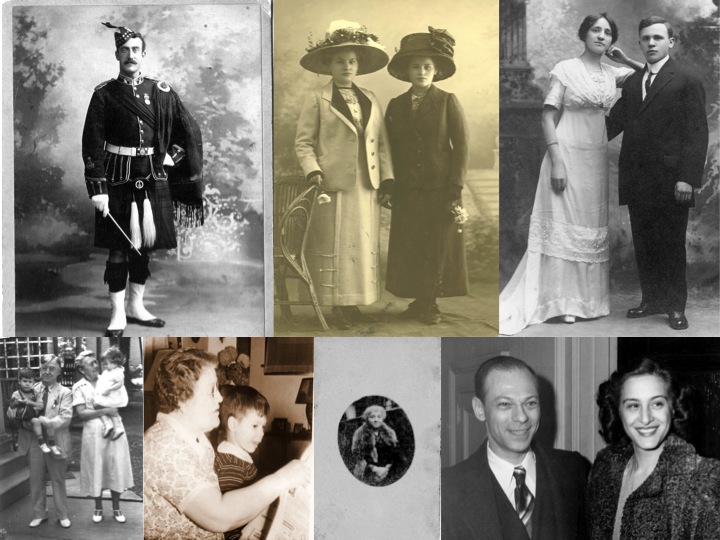
  • PHOTOS (originals and, yes, copies, if any have notes or are marked up in some way)
Why retain paper? 

When I began my genealogy journey in 1998, the main resources were documents and photos passed down to me. They survived decades in print and with care (archival boxes, for instance) they will survive to be passed down for decades in the future. 

I do not want to entrust my entire family history to a paperless existence. I've created printed booklets, professional photo books, and other types of projects to supplement all my online genealogy info. My designated heirs will get files and boxes, stripped down to the essentials so they can keep these artifacts from our family's history alive for the sake of descendants in the future. 

My heirs will also get my passwords to access my genealogy sites, plus a bit of money to continue subscriptions for a year or two in case they want to look at or add to the trees or noodle around on these sites without having to worry about the cost. Thank you to those in the future who will carry on where I leave off!

Monday, November 6, 2017

The Case Against Paperless Genealogy

Sorry, paperless genealogy is NOT for me. Some avid genealogists advocate digitizing everything, not downloading any paper copies, and/or not printing images/documents found during research. Not me. I print everything. I file everything. Under more than one surname, if applicable.

Why print in the digital age?

Walter Isaacson--the author of the best-selling bio of Steve Jobs and, now, the best-selling book about Leonardo da Vinci--sums up my main reason in one sentence. Let me quote him (you can read the entire interview here):
Paper turns out to be a superb information-storage technology, still readable after 500 years, which our own tweets likely (and fortunately) won't be.
Isaacson was privileged to read more than 7,000 pages of da Vinci's own notebooks. And he found more than just words: the man's personality shines through in the scribbles and sketches that adorn the pages. So not only can paper survive, it also can reveal clues to ancestors' inner thoughts and feelings.

A senior Google exec also warns that consumers should print out key items, including selfies, for instance, because technology will certainly change over time. "Historians will tell you that sometimes documents, transactions, images and so on may turn out to have an importance which is not understood for hundreds of years. So failure to preserve [by printing] them will cause us to lose our perspective," he has said.

Technology comes and goes, as anyone who's ever had to unlearn WordPerfect and learn MS Word can attest. Anyone who began storing data on those big floppy discs and migrated to mini-discs and migrated to CDs and migrated to flash drives. And to the cloud, then to whatever overtakes the cloud.

Meanwhile, paper lives on and on. My goal is to ensure that the next generation inherits family history. Will they learn my technology? No. Will they open my files and archival boxes and leaf through photos and certificates and memorabilia? Yes!

At top, the back of a 1930s business card from hubby's grandpa, Brice Larimer McClure. Sometime before his death in 1970, he took cards and scraps of paper and recorded facts about his ancestors and the ancestors of his wife, Floyda Mabel Steiner McClure.

This card shows the birth years of Floyda and her siblings, including the infant who died young (I eventually found proof to confirm Brice's recollection).

Being able to pick out this card from Brice's effects gave us a headstart on piecing together the entire generation of Steiners. And some grandkids think it's a bit amazing to hold in their hands a business card that's now more than 80 years old, while they hear stories of how the family made ends meet during the Depression. I scanned and shared this business card on my Ancestry tree, where dozens of people have saved it to their own trees--making the info widely available and keeping it safe for the future!

All in all, I plan to keep up the paper chase and leave a paper trail for future generations. AND I'm also digitizing everything, by the way, and doing daily/hourly backups to keep the data safe, filed by family and surname on my hard drives, flash drives, and cloud backups. But paper is my secret strategy for passing what I've learned to the younger generation. It worked for older generations--and it will work for mine.

--

For ideas about storing documents and paper in archival boxes, please check out my concise genealogy book, Planning a Future for Your Family's Past, available from Amazon (paperback and Kindle versions). Paperback is available at the AmericanAncestors.org book store.