Wednesday, January 21, 2026

Less Paper But Not Paperless Family History

I'm nearly done shredding the unneeded printouts in my genealogy files. You know, from the days when we cranked microfilm by hand and then printed or photographed something useful for family history? Or made notes while researching at a library? Or filed copies for some unknown reason?

Today just about everything is attached to my online family trees (Census records, birth/marriage/death certificates, links to burial places, other sources, and so on). I have family trees posted on multiple genealogy websites, because LOCKSS (lots of copies keep stuff safe).

Not paperless but less paper

My physical files are much skinnier but I am not going paperless. Here's a quick and incomplete list of what I'm saving, filed by surname or intermarried family groups:

  • Original vital records (certificates have been scanned and uploaded to family trees but originals were paid for and I'm leaving them in my files)
  • Letters and notes from relatives about family history (sadly I didn't date all, but these have good first-hand memories of ancestors and guesstimates of dates/places, including some hand-drawn family trees)
  • Printouts or originals of hard-to-obtain documents (non-US documents for instance)
  • Printouts of family trees and genealogies from relatives who have documented other parts of my ancestral background (not good enough to scan maybe, but good enough to consult now and then)
  • Pending (I'm waiting waiting waiting for answers to my appeals of FOIA info from the US Veterans Administration, for example)
  • Deeds of gift (for items donated to repositories, as when my Sis and I donated our aunt Dorothy's WAC memorabilia)
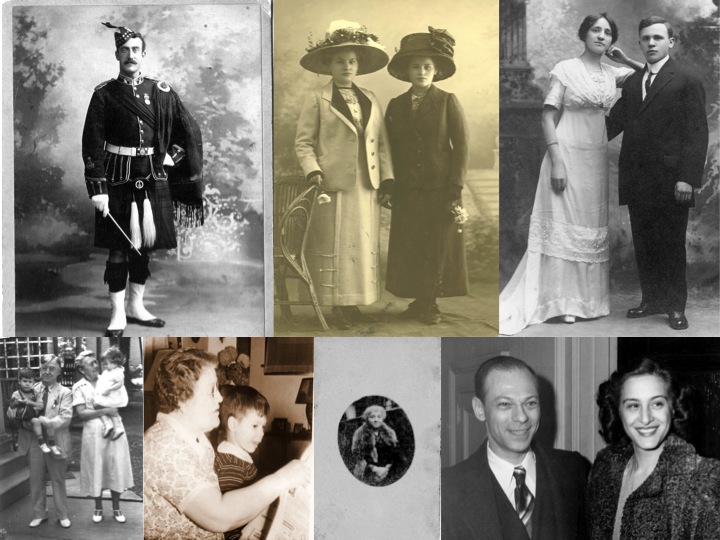
  • PHOTOS (originals and, yes, copies, if any have notes or are marked up in some way)
Why retain paper? 

When I began my genealogy journey in 1998, the main resources were documents and photos passed down to me. They survived decades in print and with care (archival boxes, for instance) they will survive to be passed down for decades in the future. 

I do not want to entrust my entire family history to a paperless existence. I've created printed booklets, professional photo books, and other types of projects to supplement all my online genealogy info. My designated heirs will get files and boxes, stripped down to the essentials so they can keep these artifacts from our family's history alive for the sake of descendants in the future. 

My heirs will also get my passwords to access my genealogy sites, plus a bit of money to continue subscriptions for a year or two in case they want to look at or add to the trees or noodle around on these sites without having to worry about the cost. Thank you to those in the future who will carry on where I leave off!

Sunday, January 18, 2026

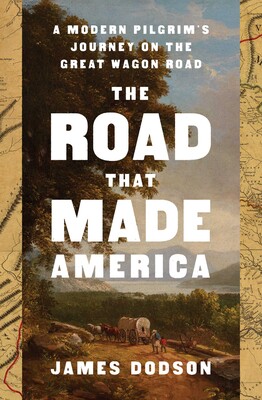
Book Review: "The Road That Made America" by James Dodson


In the mid-1730s, my husband's McClure family (so-called Scots-Irish) sailed across the Atlantic and landed in Philadelphia. They then made their way south to Virginia to settle down and farm. They were among the many immigrants who, over time, walked the Great Wagon Road

No wonder I was drawn to the recent nonfiction book by James Dodson, The Road That Made America.

Subtitled "A modern pilgrim's journey on the Great Wagon Road," this well-written book is both popular history and memoir--an informative and irresistible combination.

A professional writer with deep ancestral roots along the GWR, Dodson often heard his father and other relatives tell stories about earlier generations who walked this road and settled nearby. Eventually, he decids to explore the areas suspected to be part of the road, driving his vintage station wagon through six states over the course of several years.

Dodson visits historians, reenactors, scholars, and locals who speak of family history, local heroes, colorful characters, and important places entwined with events that shaped America, such as the battle of Paoli

Dodson also discusses his family's history, including the unproven but persistent legend that his great-grandmother was Native American and adopted into the family. The author never mentions any DNA testing, but I do hope he tests so he can figure out whether there is any basis for this family lore.

I thoroughly enjoyed my time with Dodson and was pleased to see that he came away with new insights that enriched his life. No index, unfortunately, but an extensive bibliography for readers like me who want to learn more about the Great Wagon Road and its impact on the peoples of America, then and now.

Recommended reading, especially in this year of America 250 celebrations.

Thursday, January 15, 2026

Reading the Signature to Confirm a Name


When my husband's 2d cousin Alice E. Wood (1918-1990) married William Smyth (1914-1994) in 1936, the marriage license showed her name as Alice Eleanor Wood. See it circled in red at top of this image? 

Circled in red at bottom of that image, her name was again shown as Alice Eleanor Wood. This was written by Toledo, Lucas county, Ohio officials after the wedding had taken place on September 1, 1936. 

BUT that's not how Alice herself spelled her name. Her signature read: Alice Elinor Wood. I circled Elinor in blue on the image above. 

Her name appears as Alice Elinor on other official documents, including her Social Security application. And her headstone shows her name as Elinor A. 

One Census document shows "Elinore" and one shows "Alice E" but two others show "Eleanor." Since Census enumerators rarely asked how to spell a name when listing someone on the population schedule, I don't put much weight on any which way they spell anything 😛

Unfortunately, "Eleanor" was officially on this marriage license so that's the way the name is officially indexed. But my tree (and some others) show her as "Elinor." 

Monday, January 12, 2026

How Did Sam Schwartz Meet His Second Wife?

 
On January 12, 1945, my great uncle Samuel Schwartz (1883-1954) married his second wife, Margaret Lazar Simon (1894-1976). Both had been born in Hungary, and both were widowed in 1940, just weeks apart. Sam was the older brother of my maternal grandpa, Theodore Schwartz.

I wondered how Sam and Margaret met each other. My Schwartz family didn't know much about her except they told me when Sam died suddenly, Margaret didn't hand any Schwartz heirlooms or photos over to his family. Nothing at all, according to Sam's two grandchildren, who were very disappointed.

By looking at the address where each was enumerated in the 1940 US Census, I can clearly see that Margaret and Sam were neighbors in Queens, New York. They lived in apartment buildings literally right around the corner from each other. Map above shows a two minute walk from one building to the other.

Margaret's apartment building was a six-story brick structure seen in the New York City tax photos here. Sam's apartment building can be seen in same database here.

So I imagine that Sam met Margaret in the neighborhood, or perhaps in a local store, etc. Later they moved to what was called a "private house" in New York-ese: not an apartment but a one- or two-family home. 

Thinking of Sam and Margaret on this anniversary of their marriage in 1945. 

Thursday, January 8, 2026

Background on The Bronx, Where My Grandparents Settled

Even though I was born in the Bronx and own several books about the history of the Bronx, I'm always interested in more background about this part of New York City. 

This week, I took a look at Gotham: A History of New York City from 1898-1918, by Mike Wallace. The New York Times reviewed the book here. It is a massive tome, nearly 1,200 pages long, and filled with great context about the fast-moving expansion and profound changes in the Big Apple during an important period of development. After reading a chapter or two, I realized I would get more out of checking the index for my specific area of interest: The Bronx.

Not too much of Bronx history actually turns up in Wallace's book, but the bit of material I did find was enough to flesh out more family history context. 

Twenty years of head-spinning change

On the very first day of 1898, Manhattan and Brooklyn (already the country's first and fourth-largest cities) were legally consolidated with Queens, Staten Island, and the Bronx to form the modern New York City we know today. 

Soon the construction of multiple elevated and underground subway systems would put the heart of the city within affordable and convenient reach of the "outer boroughs" (meaning everything other than Manhattan). Combined with technological and electoral changes, not to mention societal changes and historic events both local and global, the period of 1898-1918 made New York City into a formidable business, employment, housing, and political power. 

Immigrants move out of the Lower East Side

This was the booming metropolis where Ellis Island immigrants entered the United States. And these were the years when my immigrant maternal grandparents (Hermina Farkas and Theodore Schwartz) met, married, began a family, and moved out of lower Manhattan to settle in the Bronx, less than an hour's ride by subway from the business districts in midtown and downtown Manhattan. 

No car was needed in those days of cheap mass transit (my Schwartz grandparents never had one, nor did my parents). But if residents had a car, they could enjoy the view on rolling, beautiful parkways as well as driving down the elegant Grand Concourse.

As the book points out, a tremendous housing boom (of affordable apartment buildings in particular) helped attract tens of thousands of residents to the Bronx. My Schwartz grandparents first rented an apartment in a big building on Brown Place, then moved to an apartment on Fox Street, all at the Southern end of the Bronx. 

The extremely rapid growth required more infrastructure, year after year. Bronx groups lobbied for--and ultimately achieved--county status, which came with additional resources. In addition to continued residential and business development, the Bronx as a county enjoyed "home rule" of a sort.

From bucolic to built up

My Dad (Harold Burk, 1909-1978) used to tell stories of his family planning a daylong picnic outing from Manhattan to the Bronx, up to World War I at least. Dad and his immigrant parents, two sisters, and younger brother would escape the summer heat and crowds by boarding a bus or subway to ride to the upper tip of Manhattan, then getting on a horse-drawn wagon to spend a few hours in a green field somewhere in the bucolic Bronx. 

But after World War I, I suspect the Burk family cooled off in one of the big planned Bronx parks, quiet oases of grass and trees. In fact, my paternal grandparents (Isaac Burk and Henrietta Mahler Burk) moved to the Bronx by 1930, settling in an apartment building close to a big park. When grown, three of their four children lived in Bronx apartments (one defected to an apartment in Queens).

Thus, my Schwartz and Burk ancestors were part of the major population shift that quickly pushed the Bronx over one million residents and made it into an "instant city," to borrow a phrase from author Mike Wallace.

Greater Gotham added a smidge of color and context to my knowledge of my ancestors. This is my post for Amy Johnson Crow's week 2 prompt, "A Record That Adds Color," from her 2026 edition of 52 Ancestors in 52 Weeks.
Monday, January 5, 2026

My Top 5 Blog Posts of 2025


Looking back on the year just ended, here are the five most popular blog posts I wrote in 2025. 

  1. Genealogy bloggers on BlueSky. So many genealogy folks have begun posting on the BlueSkyplatform that I wanted to gather, in one place, their blog links. The list contains links to 115 genealogy-related blogs!
  2. Augusta Sarah Markell's short life. This post was popular, I think, because a newly-created Find a Grave memorial gave me the critical clue I needed to learn about a little girl who didn't appear in Census records. A reminder to revisit research and redo searches because new stuff appears all the time.
  3. Change, monitor, hands off? Many people rely on and contribute to the collaborative FamilySearch family tree. However, knowing that anyone can change any ancestor, I wrote about my decisions to change or monitor or just leave it alone, inspired by a blog post from James Tanner.
  4. Full-text surprise: Divorce papers! I was noodling around in FamilySearch's full-text search function, plugging in names of various ancestors, when up popped a link to unindexed but discoverable legal documents, including the contentious divorce initiated by hubby's brave grandma in 1901. Wow.
  5. Back up your family history! This post showed, step by step, how to download a gedcom copy of a family tree from Ancestry, MyHeritage, and WikiTree. It seems a lot of people wanted to try out these download procedures. Or maybe it was the exclamation point that drew attention?!!

Thank you to my wonderful readers for stopping by and sometimes leaving comments. I really appreciate you!

Friday, January 2, 2026

Entering My 28th Year of Genealogy

In 2026, I'm entering my 28th year as family historian and genealogy enthusiast. 

The genealogy bug first bit me in 1998, when the family historian of my mother's generation asked me a simple question about my father's father. Um, I barely knew Grandpa Isaac Burk's name, certainly not when and where he was born or died. But I became determined to find out and what an adventure that was.

Since then, I've had a wonderful time teaming up with my cousins around the world to learn more about my mother's side of the tree (Farkas, Kunstler, and Schwartz families), as well as my father's side of the tree (Burk, Jacobs, and Mahler families).

It's not a secret that I truly 💘 in-laws. This year I created a colorful booklet about the Pietroniro family, in-laws on my hubby's side of the tree. Then younger relatives chimed in with their fond memories and I reprinted the booklet to include what they had to say, in detail.

I continue to improve and/or create memorials on FindaGrave, WikiTree, Fold3, and the usual big genealogy sites. This is cousin bait and a good way to share what I know with relatives and other researchers. I also enjoy participating in some of Amy Johnson Crow's #52Ancestors challenges, as well as WikiTree Connect-a-Thons and genealogy chats on Bluesky. 

During 2025, I made three in-person genealogy presentations and many more virtual presentations, including a free Virtual Genealogy Association talk about cousin bait. Plus, my sis and I presented two programs about identical and fraternal twins (something we know a lot about, being the twin daughters of a twin).

In addition, this year I had professional shadowboxes made for Dad's World War II memorabilia and Mom's childhood jewelry (with her twin sister's as well). These archival-quality frames will keep the artifacts and the stories safe for the future.

Looking ahead, I plan to move old original photos from archival boxes to archival albums. Just about everything has been digitized but now I want to better organize the loose photos for the sake of future generations. I stalled out on this project a couple of years ago, so 2026 will be my year of archival albums. 

Now I have another bite-sized family history photo book in mind for 2026, about my parents and my siblings. This will be a great opportunity to tell my own story in context! 😊

Finally, I want to do something with the letters written from folks in England who met my aunt Dorothy, the WAC, when she was posted there during World War II. These kind people took the time to write Dorothy's parents. I've been in touch with a gentleman who is distantly related to the letter-writers, and he is tracing a direct descendant. If that doesn't work out, I will donate the letters to a museum or historical society in 2026.

Wishing you all the best in this new year.