Sunday, February 1, 2026

Ancestry "AI Stories" in Beta


Another new feature just showed up in an email sent to me by Ancestry: AI Stories, in which added info is provided to help us understand the background of a particular document. 

UPDATE: There is another way to see AI Stories, see bottom of this post. Easiest way to access AI Stories is through an email announcing the availability of such hints. So be sure to watch your email for any Ancestry hint messages. When I clicked through, the hint itself appears on the right of the screen, with the document on the left. 


In my case, the document being described in an audio narrative is about my paternal grandma Henrietta Mahler Burk crossing the border from Canada to the United States, enroute from Montreal south to New York City. 

The written description and audio incorrectly state that Henrietta and her children are going to Montreal, when in fact this is a US immigration document about going from Montreal through Vermont to travel to her mother in New York City. Below is the actual source citation, clearly described as "From Canada to US"


The audio correctly identifies Henrietta as she is shown on the manifest, and links her to her mother, the relative she will be joining in New York City, as well as to her husband, Isaac Burk, who she left in Montreal. 

Below this initial audio and written narrative are other written AI Stories designed to help me "explore what shaped their life." Here's one:

The explanatory details about cross-border movement and documentation were interesting and I found this background helpful as a refresher. I see that the footnote only refers to the particular document, not the source of this historical background.

I will continue to look at AI Stories but not listen as I think I can glean the key details about a document more quickly by reading than by listening.

With luck, the "Ideas" beta will spread more widely and so will "AI Stories" in beta, so readers can share their experiences!

UPDATE: AI Stories can be accessed from the record page of a document in your hints or attached to an ancestor. They are not yet available for every record. Below, an image of a document record page that has the notation Listen and Explore. That leads to the AI Stories page for this particular record. I like the background for these records more than listening to a "story" about the ancestor in the record. See what you think!


MORE about AI Stories can be read in the Ancestry announcement here.

Randy Seaver wrote about this feature in beta here.

Living Heirlooms

One of my vivid memories of my grandparents' apartment (just off Tremont Ave. in the Bronx) is seeing a snake plant on the window sill. That tall snake plant was in Grandma and Grandpa's back bedroom as long as I can remember.

What happened to the plant? Since Grandma passed away 60+ years ago, I simply don't know. Many keepsakes were taken by neighbors, and this may have been one of them. But I'll never forget that snake plant. 

Today, my sister and I have house plants with back stories that are meaningful to us.

We each have a pot of oxalis given to us by a long-time friend who has since passed away. No wonder we take good care of these two potted plants, a link to our late friend.

At top, a different kind of plant legacy: A cutting from a plant that a younger relative has nurtured for at least 30 years. I was honored to receive this cutting last year and am keeping it going, hoping that maybe another generation will enjoy it (along with the back story).

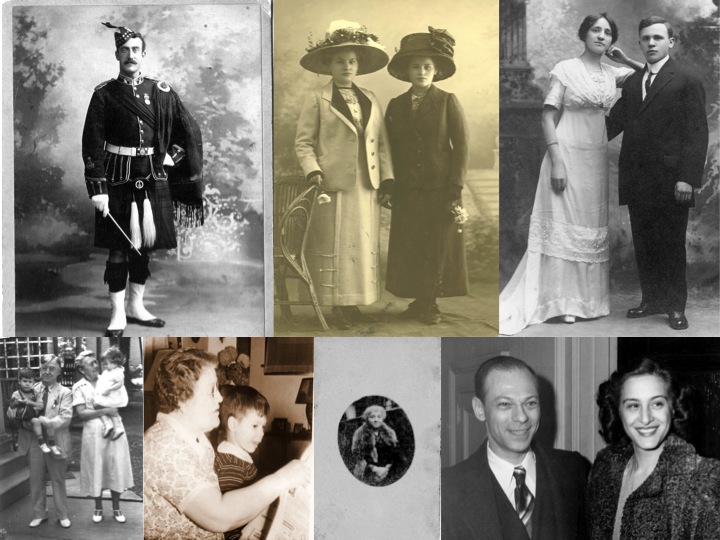
Plants are not like the wonderful old photos we inherit or the insightful diaries or colorful maps or other heirlooms we treasure from earlier generations. But they can live on in a different way. If your plants have a family history link, please remember to tell the stories every so often, to let other relatives know the significance of these living heirlooms.

Saturday, January 31, 2026

Happy Birthday to the 19th Century McClure Twins

 
On this day in 1875, fraternal twins Jesse and Bessie McClure were born. They were the youngest children of Train Caldwell McClure and Gulia Swain McClure. Jesse and Bessie were my husband's first cousins, twice removed.

The McClure line has few multiple births, so Jesse and Bessie stand out. Unfortunately, no birth records exist to indicate which twin was born first. 

Jesse McClure worked in the paper and printing industry all his life. At the age of 25, he married dressmaker Elnora "Eleanor" Ross, in 1900. Ten years later, they moved to Everett, Washington for his work. Elnora died of a stroke in 1944; Jesse died in 1952. 

Bessie McClure married Judson Deveny, a tailor, in 1897. They had a daughter, Ruth, before divorcing. Bessie married real estate agent Guy Cockley in 1903, and he helped raise Ruth. Guy died of heart disease in 1934; Bessie died from pneumonia 25 years later, in 1959. Both Bessie and Guy are buried in Falls Cemetery, Wabash, Indiana, where her headstone reads "Mother" and his reads "Dad."

Thinking of the McClure twins on the 151st anniversary of their birth.

Friday, January 30, 2026

Ancestry "Ideas" in Beta


Ancestry is trying something new, offering AI-generated "ideas" for researching an ancestor on your family tree. If you have this feature, now in beta, it will be on the top menu. Look to the right of the ancestor's name,  next to the search button on that profile. I first noticed it on Wed, Jan 28 (it had disappeared by Sat, Jan 31 but then reappeared on Feb 1).

I tried "Ideas" for several ancestors that I've researched extensively.

As shown above, the "ideas" for my husband's great aunt consisted of (1) search for the marriage record, (2) trace the ancestor's residences, and (3) locate her death cert. 

Since the marriage cert is attached as a source and in the gallery, nothing new there. Since every US Census available for this ancestor is reflected in her profile, nothing new there. Not shown in the image above but on my tree is this ancestor's death cert as a source. Nothing new there.

Interestingly, "ideas" come with the offer of a detailed action plan. At left, an explanation of why a marriage record is important (this example is from a different ancestor) and suggestions for searching for missing marriage records. (This ancestor's marriage record is listed as a source on the profile and the scan of the cert is in the gallery, by the way.)

Ancestry knows the idea to search online for a marriage index is "beginner-friendly" which I suspect is meant to encourage beginners to go ahead and search.

The next two suggestions (look for a county marriage registration and look for local newspaper marriage announcements) are a bit more advanced and clearly good recommendations.

I note that this AI action plan includes the idea to search in FamilySearch, Ancestry, and MyHeritage! Good suggestion.

My initial reaction is that the AI suggestions don't reflect what is attached to a tree and what is missing. Also these ideas are rather basic for someone with a bit of experience. Maybe this feature will be improved as the beta testing continues?

My next step is to test the AI "ideas" feature with ancestors who are not as well documented. Stay tuned!

Do you have Ancestry "ideas" and if so, what do you think?

UPDATE Jan 31: This beta feature was only on one of my three main Ancestry trees. When I turned on my computer today, it had disappeared from that tree and is not yet available on any other tree. 

UPDATE Feb 1: Beta feature "Ideas" reappeared but on a different tree.

Tuesday, January 27, 2026

International Holocaust Remembrance Day


On this day in 1945, Auschwitz was finally liberated. 

On this day in 2026, I want to honor the memory of relatives of my maternal grandfather, Theodore Schwartz (1887-1965) who were, very sadly, killed during the Holocaust. 

Their surnames were Schwartz, Simonowitz, Winkler, Stark, Zeller, Bimbi, Rezenbach, Feldman

International Holocaust Remembrance Day is today. Never forget, never forgotten.

A new, free collection of Holocaust records, from the Arolsen Archives, was just added to Ancestry, along with US Holocaust Museum records and USC Shoah Foundation recordes. Search for free here.

Wednesday, January 21, 2026

Less Paper But Not Paperless Family History

I'm nearly done shredding the unneeded printouts in my genealogy files. You know, from the days when we cranked microfilm by hand and then printed or photographed something useful for family history? Or made notes while researching at a library? Or filed copies for some unknown reason?

Today just about everything is attached to my online family trees (Census records, birth/marriage/death certificates, links to burial places, other sources, and so on). I have family trees posted on multiple genealogy websites, because LOCKSS (lots of copies keep stuff safe).

Not paperless but less paper

My physical files are much skinnier but I am not going paperless. Here's a quick and incomplete list of what I'm saving, filed by surname or intermarried family groups:

  • Original vital records (certificates have been scanned and uploaded to family trees but originals were paid for and I'm leaving them in my files)
  • Letters and notes from relatives about family history (sadly I didn't date all, but these have good first-hand memories of ancestors and guesstimates of dates/places, including some hand-drawn family trees)
  • Printouts or originals of hard-to-obtain documents (non-US documents for instance)
  • Printouts of family trees and genealogies from relatives who have documented other parts of my ancestral background (not good enough to scan maybe, but good enough to consult now and then)
  • Pending (I'm waiting waiting waiting for answers to my appeals of FOIA info from the US Veterans Administration, for example)
  • Deeds of gift (for items donated to repositories, as when my Sis and I donated our aunt Dorothy's WAC memorabilia)
  • PHOTOS (originals and, yes, copies, if any have notes or are marked up in some way)
Why retain paper? 

When I began my genealogy journey in 1998, the main resources were documents and photos passed down to me. They survived decades in print and with care (archival boxes, for instance) they will survive to be passed down for decades in the future. 

I do not want to entrust my entire family history to a paperless existence. I've created printed booklets, professional photo books, and other types of projects to supplement all my online genealogy info. My designated heirs will get files and boxes, stripped down to the essentials so they can keep these artifacts from our family's history alive for the sake of descendants in the future. 

My heirs will also get my passwords to access my genealogy sites, plus a bit of money to continue subscriptions for a year or two in case they want to look at or add to the trees or noodle around on these sites without having to worry about the cost. Thank you to those in the future who will carry on where I leave off!

Sunday, January 18, 2026

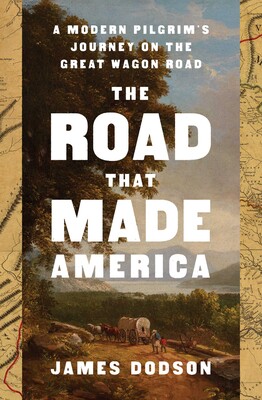
Book Review: "The Road That Made America" by James Dodson


In the mid-1730s, my husband's McClure family (so-called Scots-Irish) sailed across the Atlantic and landed in Philadelphia. They then made their way south to Virginia to settle down and farm. They were among the many immigrants who, over time, walked the Great Wagon Road

No wonder I was drawn to the recent nonfiction book by James Dodson, The Road That Made America.

Subtitled "A modern pilgrim's journey on the Great Wagon Road," this well-written book is both popular history and memoir--an informative and irresistible combination.

A professional writer with deep ancestral roots along the GWR, Dodson often heard his father and other relatives tell stories about earlier generations who walked this road and settled nearby. Eventually, he decides to explore the areas suspected to be part of the road, driving his vintage station wagon through six states over the course of several years.

Dodson visits historians, reenactors, scholars, and locals who speak of family history, local heroes, colorful characters, and important places entwined with events that shaped America, such as the battle of Paoli

Dodson also discusses his family's history, including the unproven but persistent legend that his great-grandmother was Native American and adopted into the family. The author never mentions any DNA testing, but I do hope he tests so he can figure out whether there is any basis for this family lore.

I thoroughly enjoyed my time with Dodson and was pleased to see that he came away with new insights that enriched his life. No index, unfortunately, but an extensive bibliography for readers like me who want to learn more about the Great Wagon Road and its impact on the peoples of America, then and now.

Recommended reading, especially in this year of America 250 celebrations.