Sunday, February 16, 2025

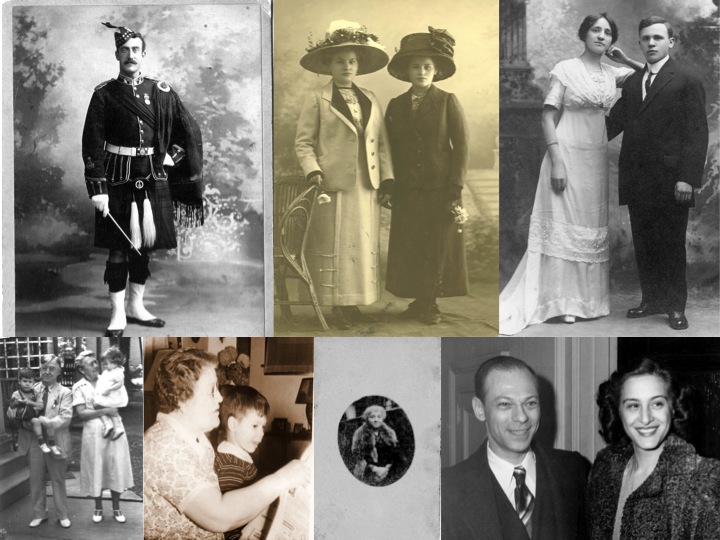
Sgt. Albert James Slatter, WWI POW


My husband's 1c1r, Albert James Slatter (1893-1974), was born on this day 132 years ago: February 16, 1893, in Cork, Ireland.

Albert's father Albert William Slatter was a military musician from London, married to Eleanor Marion Wilkinson. His father was stationed in Ireland, with family, when their first son was born. After moving around England for a time, the Slatter family resettled in Canada. 

Albert in the CEF, 3d Canadian Battalion

Albert worked as a clerk and was serving in a Canadian Militia unit when World War I began. At age 21, he enlisted in the Canadian Expeditionary Force on September 22, 1914, joining the Queens Own Rifles Regiment, 3d Canadian Battalion.

Sent overseas, Albert fought in France and Belgium in the spring of 1915. He was captured by German forces at Ypres, the first major battle involving Canadian troops. Originally, he was reported as missing in action but later was spotted on a German list of prisoners of war imprisoned in Holland. Canadian POWs in Holland faced unusually harsh conditions and unfortunately Sgt. Slatter remained a prisoner for more than three long years.

Repatriated and looking ahead

Finally repatriated and returned to Canada in January of 1919, Albert worked as a draftsman. In the summer of 1920 he crossed the border to Buffalo, New York, where his sister lived. He met and married Dorothy Bayliss (1898-1981) and they began a family in Buffalo, where Albert was now a mechanical engineer. By 1929, he had become a naturalized US citizen.

Albert rose through the ranks of the tire company where he worked and ultimately became general manager of the Armstrong Tire & Rubber plant in Natchez, Mississippi. He died of respiratory failure and lung disease in 1974. 

Today I want to salute Albert's military service and his amazing fortitude in surviving his POW experience. 

Friday, February 14, 2025

Mom's First Valentine from Dad


Military veteran Harold Burk (1909-1978) met legal secretary Daisy Schwartz (1919-1981) on a blind date arranged by his aunt Mary and her aunt Rose. Their first two dates were in October of 1945 and on New Year's Eve, he popped the question. She said yes, and they set a wedding date for Thanksgiving weekend of 1946.

Harold and Daisy's first Valentine's Day as an engaged couple was Thursday, February 14, 1946. Since both were working, I doubt they celebrated until the weekend. But Harold sent Daisy this romantic card. I see he even wrote the year below his signature. Alas, no other Valentine's Day cards survive, but this one stayed safe in her box of memories.

Remembering Mom and Dad, with much love, on this Valentine's Day.

Wednesday, February 12, 2025

1912 Valentine Sent from Chicago to Cleveland


On Monday, February 12, 1912, "Nellie" Kirby (full name Rachel Ellen Wood Kirby) put this penny postal greeting card into the mailbox in Chicago, Illinois. She and her husband, Samuel Kirby, were sending fond Valentine's Day wishes to their nephew in Cleveland, Ohio. Did the card arrive by Wednesday, February 14? 

Since the weather wasn't snowy or rainy, I'm guessing the nephew opened his mail on Valentine's Day and found this colorful card.

I find it fun to check what the weather was like in the city where an ancestor was celebrating a birthday, a holiday, and so on. Cleveland weather history for the past 100+ years is available at this site. The first two weeks of February in 1912 were unusually chilly in Cleveland, with low temps in the single digits most days. Aunt Nellie's warm wishes must have been most welcome--this and lots of other greeting cards were kept by the family for many decades.

Happy Valentine's Day!

Saturday, February 8, 2025

Change, Monitor, Hands Off?


James Tanner's excellent blog post earlier this week struck a chord with me. He wrote about the challenges of working with the FamilySearch collaborative family tree, starting with "revolving door ancestors" (one whose info is constantly changing) and "impossible pedigrees" (no sources on an ancestor means questionable parents and descendants).  

I am so, so grateful that FamilySearch has a vast array of robust (and free!) research materials available to help with my research. And its collaborative worldwide tree can give me a head start on ancestors, especially when I know very little about them or they are on a distant branch of my tree. I treat the tree as a great source of clues for me to follow up. 

And I should point out that I maintain a public family tree on Ancestry as well as putting ancestors on MyHeritage. Sources are attached and nobody can make changes (unless authorized by me).

Challenges indeed

Still, my experience with the collaborative tree echoes Tanner's experience. My immigrant maternal grandparents and their siblings had surnames (Farkas, Schwartz) that were common in Hungary, where both were born. Not surprisingly, people who don't know the family well  make mistakes when trying to add to these ancestors' FamilySearch profiles. It's a real challenge to distinguish between two Schwartz men with the same given name or two Farkas women with the same given name, born or died around the same time and in roughly the same place.

Above, part of the FamilySearch profile page for my great uncle Samuel Schwartz (1883-1954). I know a lot about Sam, partly from descendants and partly from careful research. So I know that Sam and his wife, Anna Gelbman Schwartz (1886-1940) had only two children, the ones I circled in purple in the image at top. Neither of these two sons was a twin. My Sam didn't die in 1926; he died in 1954. I have the paperwork to prove it and have visited his grave.

Yes, the photo on "Annie Gelbman Schwartz" is one I uploaded to FamilySearch some time ago. But all those extra children, not my work. Sam's incorrect death date, not my work. 

So many ancestors - so little time

In some cases, I have made changes to the FamilySearch family tree and attached sources and/or explanations. But this is time-consuming and still subject to change by others. Not where I want to spend much of my time.

My plan has been to monitor (click "follow" star ★ on line with ancestor's name) selected ancestors and read the weekly email of changes made to each, if any. Then I can decide whether to change or keep my hands off. For the most part, I'm keeping my hands off any changes, unless the ancestor is particularly dear to my heart and I can quickly and easily fix mistakes with an accessible source.

My plan is to keep adding ancestors to the collaborative WikiTree, where sources are also shown as well as biographical details. Here's the profile page of my great uncle Samuel Schwartz, whose original name was Simon, I know from the passenger manifest showing his arrival at Ellis Island. 

My WikiTree experience

So far, I haven't experienced any "revolving door" ancestor problems on WikiTree. I have encountered a few "impossible pedigree" ancestor profiles when trying to connect relatives to folks already in the WikiTree database but have successfully ironed those out with the people who originally created the profiles. The community on WikiTree is generally friendly and helpful.

In short, I consider adding ancestors to WikiTree to be a valuable use of my time, to honor ancestors and preserve their names and lives for the sake of future generations.

Wednesday, February 5, 2025

Did Joseph Markell Know His Birth Year?

I was a bit surprised to discover a discrepancy about the birth year of great uncle Joseph A. Markell (189?-1975) when I submitted a Freedom of Information Act (FOIA) request for his Veterans Administration file yesterday.

Thanks to Reclaim the Records, it is now quick and easy to see whether a US military veteran might be in the database of the Veterans Administration. Read the fine print and try the nonprofit group's super-efficient website here.

Joseph goes to sea

With the 1920 US Census in hand, I already knew Joseph served in the Navy. He was enumerated on the U.S.S. Niagara off Tampico, Mexico after World War I, as the Mexican Revolution was underway. 

The backstory: Joe's mother died when he was a young teen, which must have been traumatic. His father remarried in Brooklyn, New York, five years later. 

His descendants told me Joe didn't get along with his stepmom and began to hang around the Brooklyn Navy Yard, making money by shining the shoes of sailors going on shore leave. Within a short time, he enlisted to get away from home altogether.

Born in 1894 or 1895?

The surprise was that according to the BIRLS record for Joseph (at top), he was 22 years old when he enlisted in the Navy on Oct 31, 1916 and left the Navy at age 26. Accordingly, BIRLS shows Joseph's birth year as 1894

However, on other documents, including Joseph's World War II draft registration card, his birth year is shown as 1895, born in Boston, Massachusetts.

Which birth year was correct, the one he gave the US Navy in 1916 or the one he gave the draft board in 1942? He was born on August 14, but which year?

Now I'm browsing page by page through Boston birth ledgers and indexes for 1894 and 1895 to try to find Joseph's name and date. Browsing page by page takes time and I'm doing it little by little.

Did great uncle Joe know?

Maybe Joseph wasn't sure of his actual birth year? Maybe he didn't know when his parents were married? 

It took me some time to track down, but I finally found their marriage recorded in Providence, Rhode Island as having taken place on October 21, 1895. 

Looking ahead, when the Veterans Administration file for my great uncle arrives in a few months, maybe an official birth document will be included. 

Surprise is Amy Johnson Crow's #52 Ancestors genealogy prompt for this week.

Sunday, February 2, 2025

Fixing Peter Pietroniro's Typo

This year, I've returned to researching in-laws in my husband's family tree, Anna Yurko Pietroniro (1910-1989) and her husband, Piacentino "Peter" Pietroniro (1901-1979).

Peter was born in Casacalenda, Italy, and sailed from Naples to New York City's Ellis Island on July 10, 1923, with his brother Paul. Both told authorities they were planning to go to Montreal, Canada, looking for work. It turns out Montreal was a destination of choice for Casacalenda immigrants.

Casacalenda to Cleveland

However, Peter actually settled in Cleveland, Ohio, joining a large community from Casacalenda already living in that city. During 1923, the year Peter arrived, Casacalenda immigrants in Cleveland formed the Kalena Club, an organization still going strong today (and active on Facebook). 

I don't know whether Peter joined the Kalena Club but he certainly would have known many members and felt at home in Cleveland with people from his native town nearby, just as his brother would have found many from Casacalenda friends and neighbors in Montreal.

Ooops! Fix that typo 

Peter started the process of becoming a US citizen in 1939. He filed a Petition for Naturalization in 1943, but there was a brief delay and a flurry of amendment paperwork on the day he was scheduled to become a US citizen.

As shown at top, the amendment was necessary because Peter's surname had a typo in item (1) of his original petition document. His signature was correct, all other references to his surname were correct, but Peter couldn't become a US citizen before the court officially corrected the name with an amendment to the original petition.

After signing that amendment correcting his petition's typo, Peter became a naturalized citizen on May 11, 1944. 

Today, on the 46th anniversary of Peter's death in Cleveland, Ohio, I'm remembering him by documenting his life.

Friday, January 31, 2025

Please Back Up and Remember, LOCKSS

With so many extreme weather events and other terrible disasters, we really need to think carefully about how to preserve and perpetuate family history for the sake of future generations. Please make a plan now, starting with regular backups.

Invest in more than one backup method

Diane May Levenick wrote an excellent article for Family Tree Magazine (updated a few months ago) detailing a five-step plan for backing up genealogy files. She recommends NOT relying on free sites (like social media) as a backup. Instead, she suggests a combination of methods, including remote cloud storage, to keep family history safe.

As Diane recommends, I keep my digitized materials safe by backing up on iCloud, setting my Mac to do a TimeMachine backup every hour (using an external hard drive I can take with me if needed), and putting important files on a separate high-capacity USB drive. Or two USBs! They're inexpensive and portable.

Share now in many ways

My family history photo books are one way I'm sharing family history NOW so what I've learned about our ancestors won't be lost. Printed copies are in multiple hands because LOCKSS (lots of copies keep stuff safe). The more people who have copies, the better the chance that info will survive in our family for future generations. 

All the photos in those books and all old family photos from the early 20th century are digitized. I've shared them via USB and email over the years. I have a 1917 photo album from my late father-in-law that has been scanned but I plan to turn it into a photo book this year to provide full captions and context for future generations. The album itself is in an archival box but the album pages are fragile so making a photo book will make the story accessible to all for the long term.

I continue to post bite-sized ancestor bios on multiple sites. These don't preserve original photos or documents, but they do keep alive the names/dates/lives of ancestors in the family tree. And serve as cousin bait!

For more ideas about preparing to keep family history safe, please see my book, Planning a Future for Your Family's Past, available as a paperback or e-book.