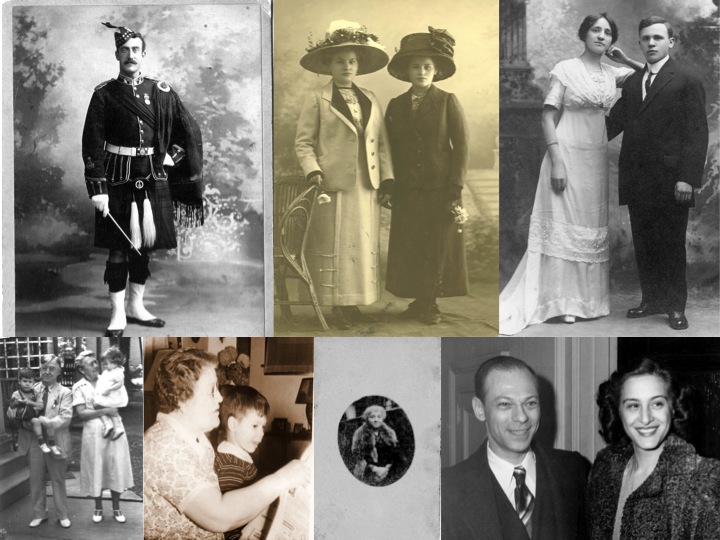
This week's #52Ancestors genealogy prompt, by Amy Johnson Crow, is war and peace.
Adventures in #Genealogy . . . learning new methodology, finding out about ancestors, documenting #FamilyHistory, and connecting with cousins! Now on BlueSky as @climbingfamilytree.bsky.social
Pages
- Home
- Wm Tyler Bentley story
- Isaac & Henrietta Birk's story
- Abraham & Annie Berk's Story
- Farkas & Kunstler, Hungary
- Mary A. Demarest's story
- Rachel & Jonah Jacobs
- Robt & Mary Larimer's story
- Meyer & Tillie Mahler's story
- McClure, Donegal
- Wood family, Ohio
- McKibbin, Larimer, Work
- Schwartz family, Ungvar
- Steiner & Rinehart
- John & Mary Slatter's story
- MY GENEALOGY PRESENTATIONS
Monday, November 6, 2023
The WWII Veteran Who Enlisted at Age 45
Thursday, November 2, 2023
Downsizing a Figure Skating Program from 2008
The program is still in mint condition...I even saved the ticket stub!
I decided to try to donate these items to a repository that collects materials related to the city of Danbury. It's important to not only identify potential institutions but also to ask permission to donate.
With a quick search. I discovered that the Danbury Museum is actively collecting materials such as these. I submitted an inquiry along with photos of the program/ticket.
Within a day, I received an email from the collections manager, who wrote: "I’m very pleased to say yes to adding this to our collection. I don’t think we have anything from this event and very little of this era in general, so this is a definite yes."
I will be signing a certificate of gift conveying ownership of the program and ticket stub to the museum, and will be delivering everything in person.
The museum will gain fresh materials for its collection, and I will feel good that these items have a safe new home, not in the rubbish or recycle bin.
Do you have items nobody in your family wants, so you want to find them a new home? Learn how to proceed by viewing my free talk "Keep Your Family's History Safe for the Future!" during the WikiTree Symposium this week, starting on Friday, Nov. 3, at 5 pm Eastern. For more about the speakers and free presentations, see the full listing here. I'm looking forward to a weekend of genealogy education and fun!
Wednesday, November 1, 2023
Back Up Your Family History!
The first day of every month--more often, preferably--is a great time to back up all of your family history files. Thomas MacEntee has great advice about the importance of a 3-2-1 Backup Plan.
As someone who lost dozens of digitized photos a few years ago when an external drive malfunctioned, I'm careful to back up frequently in multiple ways.
I have 3 external hard drives (different types, with one dedicated to photos), plus a cloud system that automatically backs up daily, plus individual flash drives for current projects (such as genealogy presentations). Also I put very important projects on my laptop as well, for easy/instant access if my desktop Mac has a hiccup.
Don't lose any of your family history. Today's the day to get into a routine and back up everything!
Tuesday, October 31, 2023
Colorful Penny Postcard from Halloween Past
The greeting asked whether the boy was practicing his violin or had decided to stop taking lessons. (Spoiler alert: he quit!)
In the early 1900s, hubby's Wood family throughout the Midwest stayed in touch via this type of penny postcard, colorful and convenient, not to mention affordable. Thankfully, 110 years later, the colors remain bright and the handwritten message is still legible today.
For more about the history of the postcard, and the craze for penny postal greetings, see this page.
Monday, October 30, 2023
Spirited Halloween Crafts, Future Family History
Three generations of my family (ages 4 and up) enjoyed a morning of spirited Halloween crafts last week.
Not only did we have a fun time, we created memories that will be part of family history in the future, with photos as conversation starters. Maybe we'll look back on this craft day as the, uh, ghost of Halloween past!
Of course these spirited beauties will be represented in the family photo calendar for 2024.
Happy Halloween, and may you have treats, no tricks.
Top: ghost, deep-sea fish, panda. Bottom: sad princess, watermelon, watermelon with sparkly rainbow.
"Spirits" is the 52 Ancestors prompt for week 44, from Amy Johnson Crow.
Thursday, October 26, 2023
Do You Participate? One, Two, Three
IMHO, here are one, two, three ways to participate even if you don't want to serve as an officer or chair a committee:
- Show up. Gen clubs and societies take care and spend money to plan programs that will be meaningful for members. Seems obvious, but a great way to show support as a member is to attend meetings (virtually or in person). As a bonus, ask the speaker a question and/or tell the program chair what you think of the presentation. If it's a virtual program, read and try to participate in the chat--often I get good ideas or make connections based on chat comments.
- Offer input. Most societies survey members about topics or speakers they're interested in, genealogical origins they're researching, and so on. They really want to hear from us. If we don't provide input and feedback, societies can't plan programs and/or library purchases that will be of benefit to members. One local club recently asked for input about genealogy books we're buying to donate to the library where we meet. Several people responded, and soon the library will be expanding its genealogy section with the club's donated books. Good for the club, good for the community.
- Submit content. Most societies have a newsletter or social media presence--and they generally welcome content from members. Consider submitting a sentence or two about a local gen resource or an upcoming conference, or a paragraph or two about a conference you attended or a genealogical book review. Or pipe up during a meeting when asked to comment on something new. Sharing benefits everyone and adds value to membership.
Please consider participating so local clubs and societies stay strong and vibrant.
Sunday, October 22, 2023
Happy 112th Anniversary to Minnie and Teddy
On this day in 1911, my immigrant maternal grandparents got married on the Lower East Side of Manhattan. Hermina "Minnie" Farkas (1886-1964) and Theodore "Teddy" Schwartz (1887-1965) were born in different towns in Hungary, and both arrived at Ellis Island in 1901 when they were just teenagers. The path to their wedding wasn't smooth, since Minnie's parents weren't crazy about Teddy at first. But over time, she won them over.
That's the lede, and I didn't bury it. In fact, I put it front and center on the cover of my colorful family history photo book, to get readers intrigued by previewing the lives of these ancestors. This is my approach, which fits with my goal of making family history accessible and maybe even fascinating for younger audiences. Your approach might be different, of course, depending on your audience and your goals.
Inside the book, I wrote that my grandparents were married for 52 years, working side by side for much of that time in Teddy's Dairy grocery store in the Bronx, New York. I put in pictures of big family get-togethers (captioned) and mentioned their charitable works. Also, I traced their parents' histories, from birthplaces to marriage to burial places, and summarized what happened to their siblings. Finally, I talked just a bit about their descendants (my readers) and included some contemporary photos. My readers will, I hope, open the book in the decades to come and smile at what will by then be quote old family photos unquote ;)
No matter how you tell your family's story, I think it helps to cater to the interests and preferences of your audience--today and tomorrow.
Wednesday, October 18, 2023
Occupation as a Theme in Family History
![]() |
| Home built by James E. Wood on Lancelot Ave., Cleveland Hts, Ohio |
In my husband's family tree, multiple generations of people had the same occupation. Another recurring pattern was younger generations choosing vastly different occupations than the generations who came before. The theme of occupation can be a really good hook for sharing bite-sized family history stories, no matter what your ancestors did for a living.
Slatter: Military men
My husband's three great uncles in the Slatter family were military bandmasters, and their sons also joined the military. I've written a few bite-sized family history bios of these men, and found lots of rich research, in particular, about Captain John Daniel Slatter (1864-1954) and Bandmaster Henry Arthur Slatter (1866-1942). But even without the extra details about how Capt. Slatter popularized the kiltie band, I can organize stories around the multiple generations of Slatters who served their country in wartime and in peacetime.
Younger relatives in our family were quite interested in the dramatic backstory of how the three Slatter brothers got their military training, starting in their preteen years. They were also fascinated by artifacts such as this WWI handkerchief, passed down in the family for more than a century. The theme of military career has been a hook for me to tell quick stories on Memorial Day and Veterans Day, not just in bite-sized bios, photo books, and on websites.
Wood: Carpenters for generations, then none
My husband's grandfather, James Edgar Wood (1871-1939) plus James's brothers and father and earlier generations going back many generations were--as the name Wood implies--carpenters. Earlier Wood ancestors were shipbuilders and general carpenters, later Wood ancestors applied carpentry to build railroad carriages, homes, and other things.
The family still has several photos of homes built by grandfather Wood in Cleveland and Cleveland Heights, Ohio, during the first three decades of the 1900s. At top, the photo shows a home Wood built on Lancelot Ave, Cleveland Heights, as it looks today--more than a century after it was constructed. The grandchildren were impressed that their ancestor built a home so sturdy that it looks very good even after so many decades.
Then I tell the youngsters that our Wood line no longer has any carpenters. After James, the next generation went into professional careers such as stockbroker, insurance, and company management. That abrupt shift got their attention, sparking conversation about the older careers and the newer careers.
Lower: Attendance officer and breadwinner
There were women teachers in several branches of my husband's family tree during the first decades of the 1900s, but usually they stopped teaching soon after marriage. Hubby's grand aunt, Lola McClure Lower (1877-1948), wasn't a teacher, though she worked in schools when she became the breadwinner of her family after her husband, a civil engineer, was confined to bed.
Lola built a career as a truant officer in Wabash, Indiana, and became well-respected in the field, giving presentations to regional conferences. How she found time to volunteer for the Red Cross for 25 years, I'll never know. Telling her story is an opportunity to hear what younger relatives think about her choice of occupation! Plus an opportunity to discuss societal and economic changes during the 20th century as more women entered the workforce.
IMHO, any occupation, in any time period, can be an engaging theme for sharing family history stories. Just don't bury the lede.
Monday, October 16, 2023
Family History as News: Don't Bury the Lede
When I write family history stories and create family history photo books, I put the important stuff close to the beginning. Why? It's an old but still relevant journalism adage: don't bury the lede.
In other words, don't wait to reveal key information until later in the story...unless there is a really compelling reason to build up to it slowly.
Will our audience pay attention?
For family historians, simply getting the attention of our audience can be a challenge. Encouraging them to keep reading or listening to a story about ancestors is often a challenge as well. Every family history incident has some drama or mystery or fascinating element--it's up to us to shape the narrative and keep the audience engaged.
If we bury the lede, we make the audience wait for the payoff to the story. Um, maybe they won't stick around until the second paragraph or second page to find out what happened to that ancestor.
But if we give them a strong hint or outright reveal the most exciting or important details near the start, our audience will know right away why this story is worth their time. I hope they'll be intrigued enough to continue to find out who, what, when, where, and why. Especially why!
It's news to them!
For example, when I blogged about my grandpa Isaac last week, my first paragraph didn't hide what was going to happen--it led with the sad fact of his death while visiting relatives. Then I told the story leading up to his unexpected death. No need for suspense, 80 years after the fact, IMHO.
Family history isn't exactly news coverage but I feel these stories are, in fact, news to our younger relatives. Maybe they've heard the story before, but not with the new discovery I just made. Or maybe they've never heard about what other people did or said about the story and how it rippled through the family in the past. There's always a way to make genealogy fresh and interesting.
That's why, as the family historian conveying ancestral news to the next generation and beyond, I believe it's up to me to put the lede up front.
Wednesday, October 11, 2023
How Floyda Won Her Divorce Plus Alimony and Court Costs
In my current family-history photo book, I'm telling the story of my husband's maternal grandparents, Floyda Mabel Steiner McClure (1878-1948) and Brice Larimer McClure (1878-1970). One page is devoted to Floyda's first marriage, to an affluent local farmer in Upper Sandusky, Ohio, in 1898. Three years later, Floyda left him and filed for divorce--very unusual for a woman in her early 20s in small-town Ohio, circa 1901.
Which court house?
A few years ago, I called two county court houses in the area to see which might have the divorce files. Turns out Floyda filed in the closest court to her hometown, much to my surprise. Other ancestors I've researched filed for divorce in a neighboring county or even another state. Not Floyda. I imagine her mother and sisters stood by her as she prepared to confront her husband in the court room.
It cost me only $3 and postage to obtain photocopies of all the divorce documentation by snail mail. Here's what I learned, all of which I'm sharing in my photo book.
Floyda's side
Floyda alleged that her husband was verbally abusive (calling her a "damn hen" and jeering that she was low-bred, among other taunts and curses I won't repeat here). She said he was also physically abusive (scratching her face, kicking her, threatening to do more).
Her husband's side
Her husband's attorney responded to the petition with just a few handwritten lines to the court. The lawyer wrote "that the facts stated therein are not sufficient to constitute a course of action." Note that the lawyer didn't dispute Floyda's version, just said the allegations weren't enough to lead to divorce. Hmmmm.
No-show leads to divorce
Floyda's husband failed to respond in person to the court summons and the judge therefore ruled entirely in Floyda's favor, granting the divorce and all she requested in her petition.
At top is the accounting of how much Floyda won: $215 in alimony and full payment of her divorce costs (in all, worth $8,400 in today's money).
The court also ruled she could return to her husband's home and retrieve her own belongings. Floyda now legally resumed using her maiden name. I found her mentioned in newspaper social items as "Miss Floyda Steiner" once again.
Only recently did I figure out how Miss Steiner met Mister McClure. That story is also in the current photo book!


