Monday, October 2, 2023

Book Review: Genealogy of a Murder


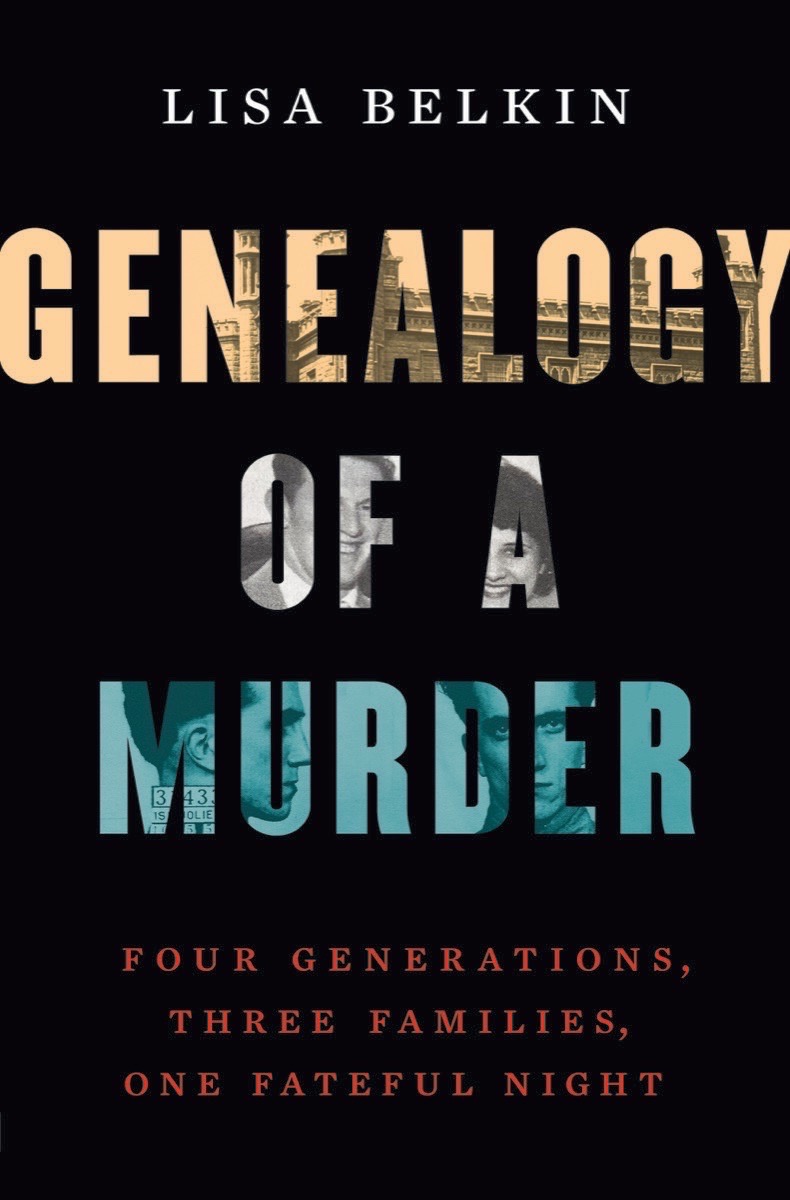
The true-crime book Genealogy of a Murder by Lisa Belkin is meticulously researched, somewhat sprawling yet quite absorbing because of her focus on the family history backstories that shaped the character and actions of three men in the lead-up to the tragic shooting of a policeman in 1960.

The police officer who died was David Troy, the shooter was Joseph DeSalvo, and the person who first mentioned the crime to the author was her stepfather, Dr. Alvin Tarlov, a man haunted by the role he inadvertently played in this crime.

Exploring how family history affects our lives, the author writes in her introduction: "We shape history even as we are shaped by it. We owe thanks (and blame) to our ancestors, and an explanation (and an apology) to our descendants. We are actors without a script, travelers without a map, gamblers who don't know the odds." No wonder I was attracted to this book!

Lots of family history

I admire the way Lisa puts each man's family history into the social, economic, historical, and religious context of the time and place, revealing the hidden influences on what these men thought, felt, and did. She labels each chapter to make it easier to know who we're following, where they are, and the date (or period). Readers come to understand how the hopes, ambitions, fears, and concerns of grandparents, parents, siblings, spouses, bosses, and coworkers swayed the decisions and actions of these men--leading to an unanticipated but deadly result.

As readers, we get an accessible deep-dive into history as these people lived it and as they shaped it. I was surprised to meet the notorious murderers Leopold and Loeb, follow along as experimenters searched for malaria cures, find out about the early days of motorcycle racing, and see different aspects of prison life, all key elements of the main story. So much detail but, in the end, important for us to get a sense of why this murder was committed. 

Consult the family trees, then read about the crime

Because Genealogy of a Murder is a lengthy book, and because of the genealogy angle, I recommend first reading and bookmarking pages xx and xxi, where four family trees are shown. Next, I recommend reading pages 3-8 for an overview.

Then I suggest skipping ahead to July 4, 1960 (starting on p. 280) to learn about the actual crime. I think it's helpful to know what happened before returning to the early part of the book and reading Lisa's chronological narrative starting with the 1900s (p. 11). 

For myself, once I understood the crime, I was more patient in following the genealogy background, which Lisa carefully assembled from a myriad of sources, including contemporary news accounts, historical resources and documents, and interviews with descendants. 

Last suggestion: if you have time, read the chatty notes starting on p. 369. The author tells us what genealogical details she couldn't find, where she looked, and where she did learn valuable details. I smiled when I saw Lisa giving credit to, among other experts, genealogist Melanie McComb of the NEHGS!

Tuesday, September 26, 2023

Surprise! How Floyda Met Brice

As I work on my latest family history photo book about hubby's maternal grandparents, I'm redoing some research and correlating older and newly-found details to tell the story of these ancestors.

Lo and behold, I believe I have solved a long-standing mystery: How did Floyda Mabel Steiner (1878-1948) meet master mechanic Brice Larimer McClure (1878-1948)? They were married on June 10, 1903, in Upper Sandusky, Ohio, where the Steiner family lived. But Brice was from Wabash, Indiana. Until now, my hypothesis was that his work for the railroad industry took him to Upper Sandusky. Turns out, that hypothesis was only partly correct, according to my latest research.

Newspaper social items 

Using newspaper databases, I found Brice mentioned several times in a Huntington, Indiana paper, in columns about current and previous employees of the Erie Railroad. In 1899, several social notes said Brice (living in Huntington) regularly visited his family in his old hometown of Wabash, Indiana. 

In March of 1902, this Huntington newspaper reported: "Brice McClure and Ott Christain, two former Erie machinists, were in the city today from Kokomo." Okay, Brice was no longer living or working in Huntington but he and his associate visited anyway. Seeing friends? Or . . .

Looking for Floyda, I found a social item from Huntington in September of 1902, with the newspaper reporting: "Miss Floyda Steiner, who has been a guest at the F.W. Rhuark home several weeks, returned to her home in Upper Sandusky, Ohio today."  

Key FAN Club link

This rang a bell about Floyda's sister Etta Blanche, married to Erie railroad mechanic Frank W. Rhuark. I went back to the 1900 US Census for the Rhuarks in Huntington, Indiana. They had a roomer with them: Otto Cristman, a machinist just like Frank Rhuark. Just like Brice. Snippet at top shows the Census, names creatively spelled.

In the past, I had no idea who this roomer was...but it's now clear he was a key member of the FAN club: a work associate of both Frank AND Brice. This man was the missing link, a definite connection between Brice and Floyda's family. 

Matchmaker sister and brother-in-law?!

Knowing that Brice and Ott had earlier worked for Erie RR, where Frank worked, and Ott once roomed with the Rhuarks, I conclude that Rhuarks were almost certainly involved in introducing Brice to Floyda, Blanche's sister.

Another reason for this matchmaker activity to occur away from Floyda's hometown is that she divorced her abusive first husband in 1901. Divorce was still uncommon and Floyda's family probably felt she had a better chance of meeting eligible men elsewhere. Thank you, Blanche and Frank, for setting the stage for Floyda and Brice to meet and marry.

"Surprise" is this week's 52 Ancestors genealogy prompt from Amy Johnson Crow. Never give up, and keep redoing your searches because new info becomes available all the time. I sure was surprised and happy to finally solve this family history mystery! 

Sunday, September 24, 2023

Inside My Family History Photo Books

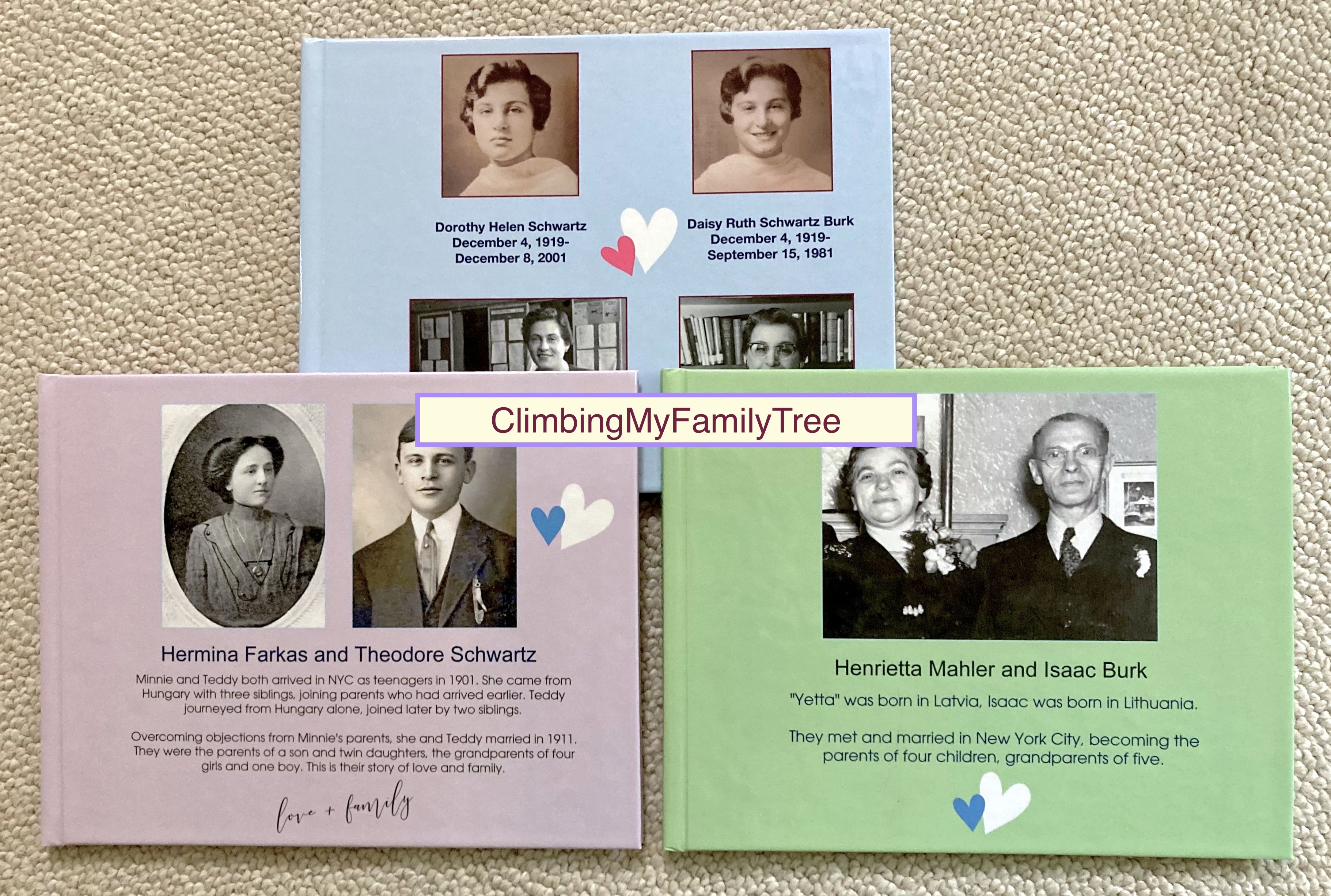
This year I've been making a series of professional photo books as bite-sized family history projects, to be read, spark questions/conversations, and then saved for the future. Above, three from my family...two more are in the works for hubby's family.

Each of my photo books contains 20 pages, plus a glossy front and back cover. The front cover introduces the ancestors and how they are related to our family, plus a sentence or two to intrigue my readers. The covers are colorful and inviting to suggest a lively story inside. 

This is just my approach--yours may be different, depending on your goals and your audience. My goal is to share family history in a conversational way, with affection and an insider's perspective so descendants get to know the people and understand a bit about family dynamics back in the day. 

The interior can be expanded to many more pages but my readers (in the next generation and hopefully generations after that) don't need or want every last detail. If they want, they can take a look at my online trees to get every fact and review every document. 

"Black and white is boring" according to my audience, so every page pops with color, whether it's colorful text, a bright frame surrounding a photo or two-tone hearts or other embellishments. 

Curated content, illustrations and info

I curate the interior content to include basic info, life highlights, family relationships, and interesting stories, liberally illustrated with photos, maps, and snippets of genealogy documents (such as passport photos, ancestor signatures, etc). Inside a typical photo book is:

  • Title page: Eye-catching photo(s) with a brief summary of how my readers are related to these people. I use wording such as..."Minnie and Teddy were the grandparents of X, Y, and Z, the great-grandparents of A, B, C, and D, the great-great grandparents of M, N, and O." Also on the title page, I include a quick overview of the arc of these ancestors' lives, like a story.
  • Pages 2/3: Backstory of one ancestor, such as my grandma Minnie. Usually I begin with when she was born, who her parents were, birth order and siblings, place of birth and what was happening in that place/that family at that time. Any dramatic events are also included (death of a sibling, for instance). This two-page spread covers birth, childhood, and possibly immigration or education. Illustrations may be a map, a childhood photo(s), diploma, passenger manifest, birth record. Not a dry encyclopedia page, but a story.
  • Pages 4/5: Backstory of another ancestor, such as my grandpa Teddy in a two-page spread. If this ancestor's early life intersects with the other ancestor covered in the book, I say where and when. Again, I look for the drama to keep readers turning the pages to find out what happens next. 
  • Pages 6/7/8/9:  Following each ancestor's path from old country to new life in the United States. Occupation, helping family get settled, bringing more relatives along, how the ancestors met and their courtship and wedding. My maternal grandma Minnie and her family rode in a horse-drawn carriage to her wedding, which I noted in one book to bring the scene to life for readers. Minnie's parents were far from rich but they marked the day in style once they accepted her choice of husband (she rejected an arranged marriage). Also I included the bride and groom's signatures from their marriage cert. Not all ancestors could write well, but these two had flowing handwriting.
  • Pages 10 through 15: Adult life/married life of these ancestors. For grandma Minnie and grandpa Teddy, I showed her with her children, described where they lived and the schools where the children were educated (using yearbook photos, autograph books as illustrations). I showed Teddy in his grocery store and told the story of how he was robbed during the Great Depression. Also I explained how the Farkas Family Tree (grandma's side) was founded and what role Teddy and Minnie and their children played in this organization, which lasted from 1933 to 1965. Large photos of big family events, with identification so the names and faces will be remembered. 
  • Pages 16/17: What happened to the siblings/in-laws of these ancestors? In the Minnie/Teddy book, I briefly summarized the lives of their siblings and spouses if any, adding photos with captions so this isn't just a list of names. Each of my books has a couple of pages of "What happened to..." because those folks were part of the family tree, whether they lived close by or far away. 
  • Page 18: My generation: I include photos of me and my Sis with some 1st and 2nd cousins as concrete links between family history of the past and relatives of today. I don't want cousins to be forgotten!
  • Pages 19/20: Timeline of these ancestors' lives, in chronological order, from birth to immigration to marriage to children to later life to death and burial. I include Census years, saying that so-and-so was enumerated as living at ___ with occupation of ___. I might add that "cousin so-and-so was also living here," such as an immigrant cousin enumerated as a boarder. This is where I can mention many events that are "facts" but with a "story" angle. An address with context helps: "Fox Street in the South Bronx, at the time a good neighborhood for raising children." 
Have fun with your family history projects! 

Tuesday, September 19, 2023

Hubby's Ancestors Worked on the Railroad


As I create new family history photo books about my husband's maternal and paternal grandparents/great-grandparents, I'm doing a bit of research to provide historical, social, and economic context for their lives.

Wood carpenters worked for a railroad

Two of my husband's Wood ancestors, father and son carpenters, were employed by a giant railroad in Toledo. In the 1880 city directory, paternal great-grandpa Thomas Haskell Wood (1809-1890) is listed as "coach builder, LS & MS R'y." His son, hubby's great uncle Alfred O. Wood (1855-1895), is listed as "carpenter, LS & MS R'y." Not everyone's occupation was listed with an employer--clearly this employer was important to the economy in Toledo, Ohio.

At top, you can see that Toledo, Ohio was a major center of the Lake Shore & Michigan South Railway (known as the LS&MS). Look at all the railroad lines feeding into it, at the western edge of Lake Erie (red circle). Lots of employment opportunities in a growth industry! This railway system evolved over the years.

McClure ancestors worked for railroads

Other men in hubby's family tree also worked in the railroad industry. According to the 1880 US Census for Wabash, Indiana, my husband's maternal great-grandpa William Madison McClure (1849-1887) worked for a railroad. In the 1900 Census for Wabash, William's son John N. McClure (1840-1919) was enumerated as an engineer for a railroad. 

Another son of William, Brice Larimer McClure (1878-1970), hubby's maternal grandpa, also worked for a railroad, beginning about 1900. Family lore says he was a master mechanic for the Big Four, formed later than LS & MS and focused on travel in Ohio and the midwest.

Brice and his new bride (Floyda Mabel Steiner, 1878-1948), moved to Cleveland, Ohio in the middle of first decade of the 1900s. For at least a decade, they lived fairly close to the railyards there so he could easily commute to work. As a master mechanic with his own tools, he had his pick of jobs and worked in a variety of industries. In fact, he delayed retirement past the age of 65 to work during World War II, when his expertise was important to the war effort.

In my family history photo books, I'm going to summarize this interesting context in a few sentences plus include a map or two to inform descendants of how and where grandparents and great-grandparents made their living back in the day. 

Sunday, September 17, 2023

New Family History Photo Book, New Surname Word Cloud

Working on a new family history photo book for my hubby's side of the family tree, I created this colorful surname word cloud for the back cover. I like to use the free WordClouds site. The bright colors, diverse fonts, and overall shape are intended to catch the attention of my readers, young and old. 

The front cover will have the wedding portraits of my husband's maternal grandparents, Floyda Steiner McClure (1878-1948) and Brice Larimer McClure (1878-1970), the main subjects of this book.

The point of making a professional photo book is that it looks polished and attractive, as well as being sturdy enough to last for a long time, so family history will live on and on. I see these books as worthwhile investments in perpetuating the story of our ancestors...buying on sale or with discounts to keep costs down.

This book, like my earlier photo books, will be heavy on captioned family photos and include cropped scans of a few key documents. Not one of my younger readers will have heard of a delayed birth record--something I hope will intrigue them.