Showing posts with label veterans. Show all posts

Sunday, September 6, 2026

The LOC Veterans History Project, Part 3: Recording the Interview

This post looks at plans to record an interview for the Library of Congress's Veterans Oral History Project.

You can do it yourself! The LOC shows how, with recommendations for both iPhone and Android devices. Download their pdf handout here with suggestions, plus the specifications for which types of files are accepted.

Below, part of the LOC page showing that interviews can be submitted on DVD, CD, digital video media, audio cassettes, or USB flash drives. (I submitted on a flash drive. More on this in a later post.)

Library of Congress media specifications for Vet Oral History

Audio or video?

Originally, my husband and I planned to do an audio interview using a digital recorder from a decade in the past. Sadly, that recorder no longer works. Our even older micro-cassette recorders no longer worked, either. We didn't want to use our iPhones or iPad because we were unsure of how good the quality would be, how long the interview would go, and how much storage would be needed. If we were more tech-savvy, we would have done this ourselves. But we weren't confident.

Then we thought about our local senior community center, which has a modest video studio. We visited to see the layout. There is room for two to sit on comfortable chairs, plus space for a video operator and a sound operator. Just as important, the studio recently acquired lavalier microphones to clip on our collars, which would mean better, clearer sound than sharing a single mic on a stand or putting one iPad between the interviewer and interviewee to record.

The awesome studio volunteers offered to record the vet interview and, depending on how it turned out, let us choose to submit video or audio. We explained that our practice sessions ran about one hour, and that we would bring a few small props to hold up for the camera. 

Writing the intro

According to the Library of Congress guidelines, the interviewer must state the following info at the outset:

  • Interviewer's name and organization affiliation, if any (such as a Scout who is doing this interview as a special project). No organization affiliation in the case of interviewing my hubby.
  • The veteran's full name.
  • The date and location of the interview.
  • The names of any others present, such as recording equipment operators.
  • Say that the interview is being conducted for the Library of Congress Veterans History Project.
  • NO private info (no military serial numbers, no home addresses or phone numbers, etc).
I wrote this intro separately from the questions, and checked with the recording operators about how to pronounce their names. Also, the operators (and anyone else present at the interview) needed to sign release forms, because their names would be mentioned in the interview intro.

Recording in progress!

On the day of the interview, my hubby and I brought our list of questions, written intro, drinking water, props, and release forms when we went to the studio. We also brought a large capacity USB flash drive. We dressed neatly, avoiding loud prints or plaids that might distract, and I made sure our faces didn't look sweaty before we began. If your vet has a uniform or hat or shirt, I think that would be acceptable to wear for an interview.

I sat in the easy chair on the left while my hubby sat in an easy chair on the right. Between us was a table with props (shoulder patches, etc). We also put a prop or two on the arms of our chairs, handy for when we needed them. The wonderful operators clipped on lavalier mics, tested sound levels a few times, and did a quick test video of the intro to be sure we were in focus and the lighting was good.

Then...they put a sign on the outside door, "recording in progress," and rolled the camera. Actually, they had an older, compact pro TV camera mounted on a tripod plus a newer iPad on a tripod for redundancy as they recorded. I love suspenders and belt people who go the extra mile to be sure nothing gets lost.

After they gave the signal to begin, I read the intro, and eased into questions about hubby's parents, birthplace, and siblings; his education prior to entering the military; and his decision to volunteer for the draft after high school graduation. He spoke of being inducted into the US Army, going through Basic Training, then Second Eight, then answered the questions about how the rest of his military service unfolded. Sometimes we smiled at a story, letting our natural reactions show.

As my hubby talked, he occasionally reached down for a prop. The camera operator did a closeup on each prop as my husband spoke about it. Occasionally during a story, the operator also did a closeup of my hubby's face. We were so fortunate to be working with people who know what they're doing and wanted to get this oral history recorded properly for the sake of future generations.

In the moment

During the interview, hubby and I were in the moment, not nervous, not conscious of being in a studio, just concentrating on our conversation. We didn't have to worry about whether the recorder was working or the light was wrong or the mic was off. The operators said nothing, never moved, carefully focused on the equipment working properly and letting us get on with the content in our own way.

As he spoke of his military experiences, my hubby's face and voice grew quite animated here and there, recalling something humorous or surprising. He told a story that was brand new to me--in our many years of marriage, I had never heard that anecdote! I now refer to that as the "box of rocks" story. Spontaneous and fun. 

Although we had anticipated the intro and planned for the interview itself, we hadn't planned what is, these days, called an "outro." At the end, I just turned to my husband and thanked him for sharing details of his life as it was before I ever knew him. He smilingly thanked me for asking about his service, and then we reached out and held hands for a moment before the cameras stopped rolling. Spur of the moment, from our hearts.

Remember: 30 minutes minimum, no edits

The LOC doesn't allow edits. We knew from the start that we wouldn't be able to cut anything from the interview, so our practice sessions were extremely helpful in planning what to cover and what to omit, and how to frame a question and an answer. 

Also, having practiced, we were sure the interview would last at least 30 min, the minimum allowed for inclusion in the LOC collection. 

The studio volunteers told us they would review the recording to be sure everything came out fine. Based on their on-the-spot assessment, they told us to go ahead with the video, not just audio. They would convert to one of the content types (as shown in the handout) and put it on the USB I had brought to them.

Importantly, I would also be able to duplicate the video to put on USB drives for our family, who would be able to view this interview at their convenience.

Next: paperwork before submission.

Sunday, August 30, 2026

The LOC Veterans History Project, Part 1: Getting Ready


This summer, I helped to plan my husband's participation in the US Library of Congress's Veterans History Project. He had served in the US Army decades ago, during peace time. We were able to do a video interview that I've just submitted (with a short stack of paperwork) to the Library of Congress. This is a great way to keep an aspect of family history safe in another repository.

Although I won't hear for weeks (or months) whether the video will be accepted for posting on the LOC website, I'm blogging about the process so you can see how to plan for a military veteran (maybe yourself or someone in your family or your community) to have their first-person account of military experience included in the Library of Congress's archives.

The vet does not have to have served during a war to participate. Peacetime service memories are welcome because they reveal different aspects of life in the military. Nor does the vet need to be an officer, or career military. My hubby focused his memories on day-to-day life in the US Army, training, skills acquired, people he met, and lessons he learned in four and a half years of service.

There's a bit of detailed paperwork to participate. IMHO, this is worthwhile because allows us to tell much of the veteran's story in writing, not just verbally or via video or through letters from back in the day. 

Learn what will be needed

First, review the "field kit" for the LOC Veterans History Project and download it here. This is not just an overview of how to participate, it also has documents you can fill out online or print and fill out by hand, if you choose. Plus the documents explain what can be submitted, and who may submit these materials. I downloaded this entire package of documents to have handy.

Above, a snippet from the guidance for veterans on how to participate in this LOC project. 

Read the FAQs

Next, look at the frequently asked questions page for additional info about this veterans project. I learned from the FAQs, for instance, that the vet (and interviewers) retain copyright for submitted interviews (and other materials). Anything recorded for the Library of Congress can be shared with relatives, historical societies, community groups, and other folks if the vet would like. Note that if you plan an audio or video interview, it cannot be too short. See this image.

Interview and/or more materials 

The Library of Congress would like a veteran to submit an interview (audio or video) of at least 30 minutes in length. It can be longer, but no shorter. No editing, no previous interviews with new intro added. The interview for the LOC should include an intro about who, what, when, and where. (I'll explain more in a later post.)

An interview can be accompanied by 10 original photographs/letters and/or 20 original, unpublished documents/diaries/memoirs pertaining to the vet's military service. Not mandatory to have more than one type of medium.

Note that this is AND/OR for each item. Interview alone, or with photos and/or documents. So one category or two categories or three categories of original media can be submitted if you choose.

My husband and I decided on an interview alone, no other materials to be submitted except the documents to go with the video. But he did have some props handy to show during the interview.

Start by reading and thinking ahead

Before you do anything else, read through the overview and the FAQs so you know what to expect and how to prepare. This project requires careful documentation and preparation; submissions that don't meet the requirements will not be accepted. 

Let me reassure you: one step at a time and you can get this done for the veteran(s) in your life! 

Tune in next time for more.

Saturday, November 9, 2024

Honor Roll: World War I Veterans from Woodbury, Connecticut

This dignified memorial plaque honors military veterans from Woodbury, Connecticut who served in the two world wars.

In this first of two blog posts, I'm transcribing the names of men and women who served during World War I, as listed on this memorial. 

Adams, Ralph C.
Adams, William M.
Anderson, Gustave Daniel
Barnes, George H.
Bauch, Harry J.
Beardsley, Howard D.
Bennett, Edson J.
Bennett, William B. Jr.
Bradley, Hubert L.
Brotherton, Frederick L.
Cahill, William P.
Carroll, James P.
Carroll, William J. 
Charter, Legrand F.
Crowley, Jeremiah J.
Dawson, James S.
Drakeley, George M.
Dunlap, Collier W.
Eyre, Alfred G.
Fitzsimons, Dwight
Fitzsimons, Thomas
Foster, Leroy E.
Foster, Ralph E.
Fox, John Jr.
Gibson, Asahel R. Jr.
Gibson, Philo A.
Gorman, Joseph M.
Halstead, Leo D.
Harvey, Robert W.
Harvey, Samuel C.
Hawes, Charles L.
Jackson, Pearlie C.
Karrman, Milton A.
Lathrop, Leslie E.
Leavenworth, Raymond R.
Main, Arthur G.
Mason, Archie D.
Mason, William A.
McDonald, Floyd J.
McDonald, Paul L.
Nelson, Frederick
Parker, Sterling
Parkin, Ernest
Randall, Henry S.
Randall, Louis L.
Reichenbauch, Alfred
Reichenbach, Auguste
Reilly, Bernard
Ross, Frank A.
Roswell, Hubert M.
Salmon, John S.
St. Pierre, Alphonse
Terrell, Eli B.
Terrill, William Gladston
Thompson, Louis F.
Tracy, George F.
Turner, Charles Norman
Tyler, Walter Jr.
Walker, Czar E.
Walker, Edward C. Jr.
Walker, Harold
Walker, Lillian
Willner, Abraham L.
Willner, Ralph L.
Wolfe, Joseph O.
Wooden, Ralph V.

With sincere appreciation for their service to country.

Tuesday, August 16, 2022

Free Ancestor Memorial Pages on Fold3


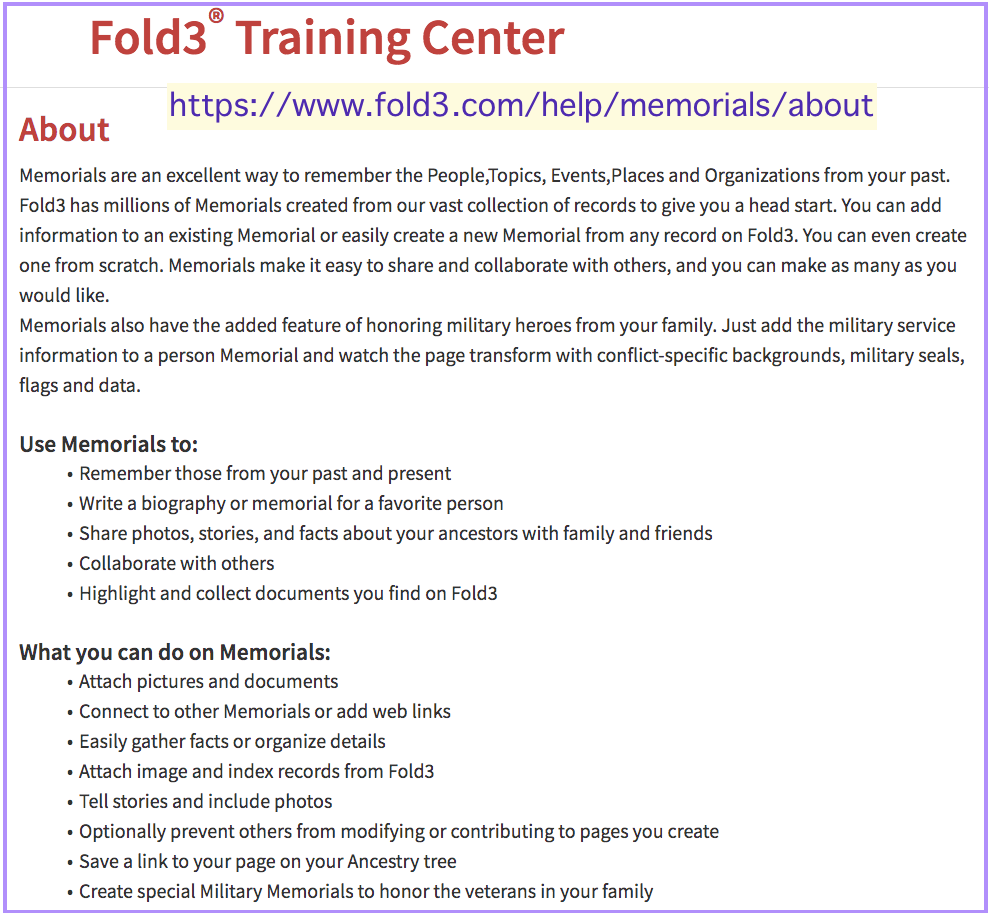
I'm in the process of setting up or beefing up memorial pages on Fold3.com (owned by Ancestry) for ancestors who were military veterans. Memorial pages can be created for non-veterans--even for special events or organizations--but because Fold3 is heavily focused on military records, I'm prioritizing memorials for ancestors who had military service.

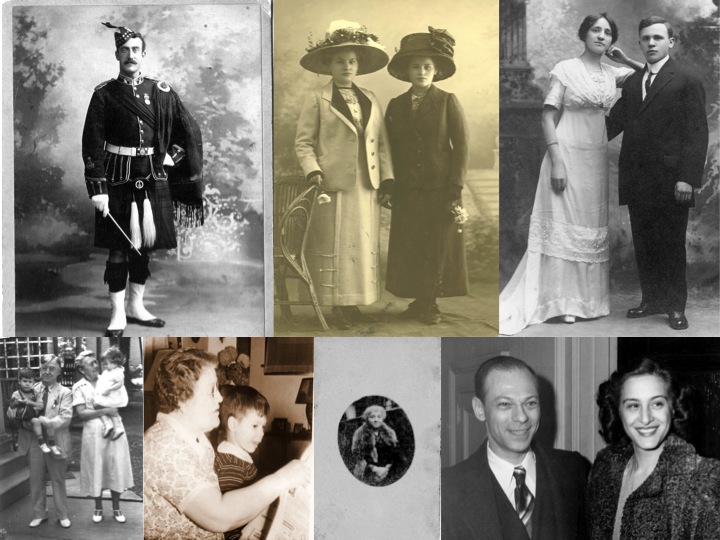
At top is a photo showing thumbnails of the 12 memorial pages I've created for vets in my family tree and my husband's family tree. Some were from the US, some from England, some from Canada. Some served in the US Civil War, some in World War I, some in World War II. But now all are searchable and findable on Fold3!

You don't have to be a Fold3 subscriber--just register for a free account. This will allow you to set up memorials, add bite-sized bios, and upload photos. 

But remember, you won't be able to conduct extensive research unless you subscribe, with the exception of using more than 200 free Fold3 databases.


Fold3 may have already given you a head start by creating a memorial page with your ancestor's name and, possibly, some details about his or her service. I discovered a few of my ancestors already had a memorial page with bare-bones about military service. Then I added a bite-sized bio, photos, etc. 

To start, register for a free account and then go to the "training center" page where you can learn more about memorials. From Stories Behind the Stars, here's a brief video that shows, step by step, how to create a new memorial. 

Just another way to keep our ancestors alive by sharing info on multiple sites.

This is my post for Amy Johnson Crow's #52Ancestors challenge, following this week's theme of service.

Sunday, November 28, 2021

Remembering WWI Vet Frank M. Jacobs


My 1c2r, Frank M. Jacobs (1896-1974) enlisted in the US Marines on April 18, 1917, when he was 20 years old. While he was fighting in World War I, he left behind his mother (Eva Michalovsky Jacobs), his father (Joseph Jacobs), and his siblings in Brooklyn, New York. 

Fighting in France

After a brief period of training, Frank was sent to France on June 27, 1917, where he fought in the Toulon Sector, Aisne Defensive, Chateau-Thierry Sector, and Soissons (the Aisne-Marne Offensive). All this detail is on his New York "Abstracts of World War I Military Service" record, shown below. By June of 1918, he had been promoted to Corporal.


Sadly, Frank lost a leg on July 19, 1918 during fierce fighting at the Battle at Soissons. He received medical attention in France and was returned to the States for further treatment. Meanwhile, more tragedy in the family: His father Joseph, a chronic invalid, died in November of 1918, before Frank was formally discharged.

So far as I can determine, Frank never married or had children. He pursued a long career in advertising. On his WWII draft registration card, Frank showed his employer as the big Madison Avenue firm Young & Rubicam.

In Frank's own words

Frank wrote home quite regularly throughout his service in WWI. His family shared some of those letters with local newspapers, a common practice at the time. Thanks to the wonderful (and completely free!) newspaper site Fulton Search, I read a number of letter excerpts and interviews with Frank, supplementing the official records with my ancestor's own words.

Only a week before being wounded, he wrote to his family that "I am glad to be one of the lucky ones to come through without a scratch. Our regiment has been cited five times for conspicuous bravery." On July 19, the newspaper reported that letter along with the news of Frank's injury.

In an interview with the Daily Standard Union newspaper in Brooklyn, New York, Frank described what happened in the Battle of Soissons. He told the reporter that "a high explosive shell broke right beside me. A pebble hit me in the head and I put my hand there. It was then that I noticed that my leg was gone. I didn't lose consciousness then or afterward."

I'm currently writing Frank's bite-sized bio and posting on genealogy websites to keep his memory alive and share his war experiences in his own words.

Plus I'm pleased to post this on the Genealogy Blog Party for November of 2021!

Sunday, May 16, 2021

More Bite-Sized Bios for Veteran Ancestors

With Memorial Day on the way, I'm writing bite-sized bios for ancestors who served in the military. These are focused little projects that I can complete and share in a short time.

Also, I'm thinking creatively about other ways to remember vets in my family tree and show appreciation for their service.

Memorial Page for Louis Volk

At right, part of a Memorial Page I created on Fold3.com to honor the life and military service of my great uncle Louis Volk (1889-1952), who married my grandma's sister Ida Mahler (1892-1971) in 1920. Creating the page was free, because I access Fold3 through my state library system.

I wrote a few sentences about Louis Volk's life, including his Army assignment to an Alabama munitions plant during World War I. Then I uploaded his photo (captioned with name/dates) and a copy of the NY state record summarizing his WWI military experience (a key source). This is a way to thank great uncle Louis for his service and keep his memory alive for future generations.

Veterans Memorialized on Cemetery Sites

Several of my great uncles in the Farkas family tree also served in World War I. They were buried at Mt. Hebron Cemetery in New York, which is creating a database of veterans laid to rest there. 


As shown above, I submitted a few details about great uncle Albert Farkas (1888-1956), including the war, years served, and branch of military. 

In addition, I noted his military service on his Find a Grave memorial page and linked all relatives, making it easier for descendants to learn about his life. More ways to keep his memory alive and highlight his service to country.

Wednesday, August 19, 2020

The Women Married to Civil War Ancestors

Excerpt from Wood Civil War Ancestors booklet
In researching and writing about my husband's Civil War ancestors (both blue and grey), I'm making sure to document the lives of the women they married.

Some wives outlived their Civil War veteran husbands, by a few years or decades; some wives died while their husbands were away at war; some wives died soon after the vets returned home. Each has a story and I want to be sure their lives are remembered, along with their husbands.

Here's my plan for writing "cradle to grave" about each veteran and his wife or wives:
  • Head the first page with veteran's full name and dates. 
  • Explain the veteran's relationship to readers in the next generation.
  • List the full name of his wife (or wives) and her dates. 
  • List the units in which the veteran served (blue indicates Union, red indicates Confederate).
  • First paragraphs summarize the man's family background (parents, siblings, birthplace, movements, occupation). This is the "cradle" part of "cradle to grave" in a nutshell.
  • Emphasize "story" part of family history by adding a dramatic hook early in the veteran's life narrative. Here, I say that this man and two brothers were all in the Union Army, but their lives diverged after the war was over.
  • Include at least one illustration, such as a newspaper obit or a Civil War Pension card. 
  • Say when and where the man got married, and any special circumstances. In the excerpt above, John N. McClure married Rebecca Jane Coble only 3 days after he enlisted in the Union Army, just before he shipped out with his unit. Quite a start to their married life.
  • Describe the wife's life as well as the veteran's life to add context to the family tree overall. 
  • Say when and where (and why) the veteran and his wife died and were buried, the "grave" part of this "cradle to grave" profile.
What's in This Family History Booklet?

My booklet will have a table of contents, a listing of Civil War military units in which the men served, and possibly the key battles or actions in which they participated. 

This is a work in progress, having grown from the quickie booklet I originally envisioned, so I may decide to add an index. After all, I'm profiling 19 men and their wives/families. That's a lot of names. I want to make it easy for descendants to look up any particular ancestor by checking the table of contents and/or the index.

Highlight the Drama: Spoiler Alerts Wanted!

I'm going to write a page highlighting "not to be missed" dramatic or interesting details about some key ancestors. Spoiler alerts will actually whet my readers' appetite for more. 

For instance, Robert Crooke Wood was the next generation's 4c5r and a senior U.S. Army surgeon. He married Ann Mackall Taylor, the oldest daughter of Major General Zachary Taylor--yes, the U.S. Army veteran who later became the 12th U.S. president. Zachary Taylor's daughter Sarah married Jefferson Davis. Yes, that Jefferson Davis. So Robert Crooke Wood's father-in-law was a future U.S. president, and his brother-in-law was a future Confederate president.

The Civil War intensified the family drama: Two of Robert Crooke Wood's sons fought for the Confederacy, while their father remained on active duty in the Union Army. (Many thanks to my hubby's wonderful cousin L for sharing his knowledge of this distant part of the Wood family tree.)

Don't you think such spoiler alerts will get my readers' attention?