
This summer, I've been helping my neighbor learn more about her ancestors, particularly her father's family history. Here are my take-aways about researching and documenting a non-relative's family tree.
- Listen carefully to old family stories--twice. My neighbor had some memories about ancestors, and also had written down what older relatives said before they passed away. A handful of these stories had important clues as starting points (names; where someone was born or died or married) and details that could be checked (who was in an orphanage and roughly when). Once I had a few names on the tree, I listened again as the neighbor told stories, because now I had a better idea of who was who.
- Look at old family documents with fresh eyes. This neighbor had some baptismal records, marriage certificates, etc. More great starting points for me, a non-relative, to dig into the family's history. I had to ask about a few possible ancestors with similar names, but pretty quickly I learned to distinguish who was who. Luckily, this neighbor also kept scraps of paper with notes about family history, and we used a few of the nuggets to untangle relationships.
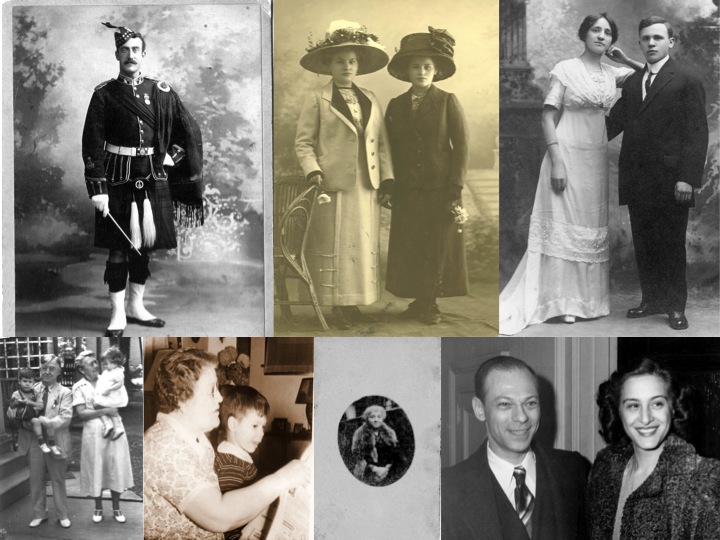
- Look at old family photos with fresh eyes. Old gravestone photos provided clues to relationships and notes on burial places. Two old portraits, labeled "Grandfather ___" and "Grandmother ____" had clues like accessories and photo studio location that made more sense after we confirmed who the people were.
- Gently determine how much to tell. After a bit of discussion, I concluded that my neighbor was intent on knowing everything and anything, wherever the story might lead, warts and all. I did discover some legal problems in one ancestor's past, plus babies who died young and were forgotten in family stories. Also, I found a glowing obit of a much-respected great-grandpa. Most important, research suggested that her father's "parents" (as named on the Census and in family stories) had actually informally adopted him after a family crisis. We will follow up with DNA research.
- Research widely. I had no way of knowing where the initial clues might lead. I used multiple genealogy sites and multiple newspaper sites--and struck gold, with news reports naming names. Then full-text search on FamilySearch yielded unexpected papers that explained critical events in the paternal line. Of course there were people with similar names who were NOT my neighbor's ancestors, but it didn't take long for me to learn to rule those out.
- Present a story, not a pedigree. Often I use tree invitations to share family history. This time, rather than present a family tree or pedigree chart, I drafted a two-page narrative to tell the broad outline of my neighbor's family history over the past 125 years. I also summarized a trend I had observed, of her father's grandparents regularly stepping in to take care of grandchildren after a parent's death. As I told the story, I showed my neighbor printouts of a few documents (news stories, draft registrations) that helped illustrate what happened. My neighbor now has a narrative she can use to share family history with her preteen grandkids, in addition to viewing the online tree.
Most rewarding was writing a narrative to present my neighbor's family history in brief. This introduced her to ancestors she never knew and, in some cases, never heard of...along with news stories and other records that kept the "plot" moving from one decade to the next.

